
5 Home Remedies for Knee Pain
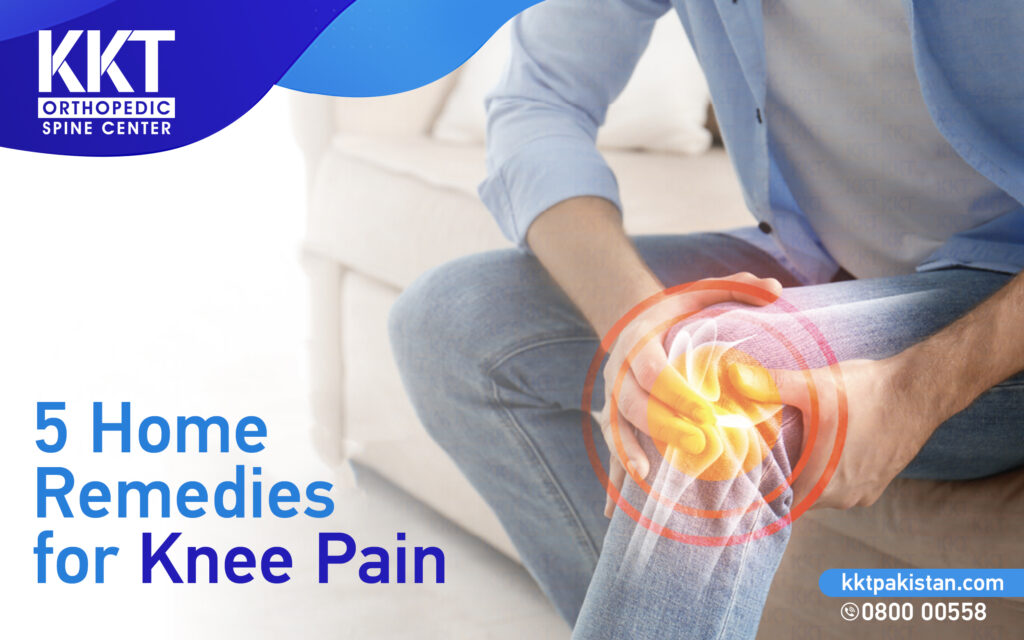
For many people, knee pain is a very common part of their daily life activities. Several medical conditions can affect the knee joint with aging being the most common cause of all. Several short-term or long-term reasons can lead to knee pain. Some of the most common causes include the following: Obesity Arthritis Injection in the bones Injuries related to knee Stress, strain, or sprain on the ligaments Moreover, there are various medical conditions that increase the risk of knee pain including: Overweight Sports injuries Lack of muscle strength or flexibility Previous injury associated with knee joint What is Arthritis? Arthritis comprises almost 100 different types of joint-related conditions. There are two major types of arthritis; Rheumatoid Arthritis (RA) and Osteoarthritis (OA). The effects of rheumatoid arthritis are more than just joints. The joints most commonly affected by arthritis include the following: Hand Feet Knees Lower back Hip joint Shoulders Symptoms of Knee Pain: The pain’s severity and location determine the symptoms. Some of the common symptoms of knee pain include: Swelling and stiffness Redness and warmth to the touch Weakness or instability Popping or crunching noises Inability to fully straighten the knee Preventing Knee pain: Preventing this condition is not always possible however, the pain can be managed by adapting to some practices. Various home care practices can help with warding off the knee pain associated with injuries. Some of the simple precautionary measures include: Maintain a balanced diet and a healthy weight Perform low-impact exercises Wear shoes that ensure proper leg alignment and maintain balance Walk or swim Home remedies for knee pain: The extent of damage and pain determines the knee pain treatment. However, there are some remedies and ways for knee pain relief at home. These include: 1. Physical activities: According to Arthritis Foundation, research shows that people with osteoarthritis should perform exercises. The most non-drug and effective treatment for osteoarthritis patients is exercise. It helps the patients with pain (reduction) and movement (improved). 2. Strengthening exercises: A physical therapist is one who can better identify what exercises the patient can/can’t perform. However, there are some exercises and ways for strengthening the muscles for instance: Perform one-leg raises: straighten your leg while sitting or lying down. Perform step-ups: place one foot on the step, then the second, and then step down again. Repeat this. Standing hamstring curls: stand straight, knees inches apart, lift one heel above keeping thighs aligned with knees at 90 degrees. 3. Maintaining proper posture and support: Following are some ways to prevent any strain due to improper posture: Avoid sitting on couches that you can “sink” into Wear comfortable and supportive shoes Don’t sit for too long, move! Sitting in the same position for prolonged time periods can result in stiff joints. 4. Maintaining a healthy weight and diet: Excessive weight causes inflammation in the body which affects the knees. Moreover, extra weight also puts more pressure on the joints which is why maintaining a healthy weight can reduce long-term knee pain. The Arthritis Foundation recommends a Mediterranean diet for regulating inflammation and osteoarthritis. 5. Practicing P.R.I.C.E: Protection, rest, ice, compression, and elevation (P.R.I.C.E.) can help relieve mild knee pain. Protection refers to taking measures to protect the knee from any further injuries. Rest reduces the risk of further injury giving the knee tissues time to heal. However, stopping all physical activities at once isn’t beneficial, as it can result in stiffness. Ice therapy can help reduce inflammation and swelling. However, do not put ice directly on the skin, wrap it in a cloth then apply. Perform ice therapy for about 15 to 20 minutes, multiple times a day. Compression for the pain can be placed via knee support. But please note to keep the bandage firm not tight. Elevation refers to keeping the leg raised. This helps and encourages blood circulation and reduction in swelling. In an ideal situation, the knee should be above the heart. When to get medical attention? Knee pain due to a sudden injury in an accident or fall requires immediate medical attention. However, if the knee pain persists for a longer period, worsens, and interferes with daily activities, you should seek medical attention. Book your appointment with highly qualified KKT Orthopedic Consultants in Lahore, Karachi, and other operational KKT centers across Pakistan. For appointment booking, get in touch with us through our patient care line. Phone: 0800-00-558 Or click on the link below.
Anti-Inflammatory Diet for Rheumatoid Arthritis
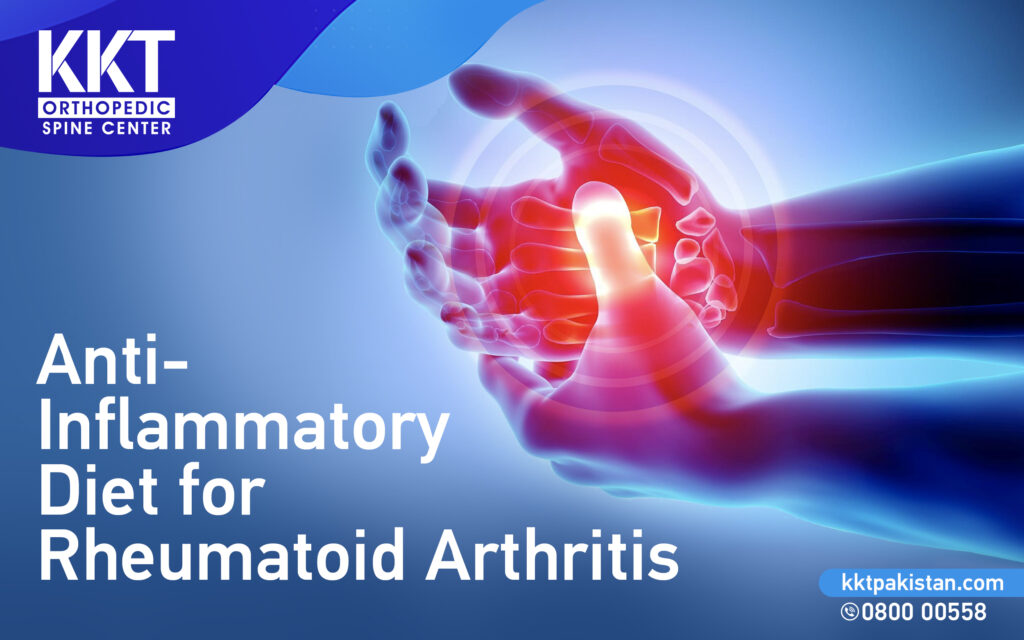
According to some research, there are no such foods “categorized” as a diet for rheumatoid arthritis. However, there do exist some foods that play a vital role in improving the symptoms. One of the most common types of arthritis is associated with inflammation and pain in the joints, also known as RA. It is a condition in which your joints are attacked by your own immune system. The specific food or diet that can help the inflammation is also known as the Mediterranean diet. The fruits, vegetables, and food included in this diet contain antioxidants known for their ability to curb inflammation. Find rheumatoid arthritis food to avoid below. Anti-inflammatory diet for Rheumatoid Arthritis: The aim should be to maintain a healthy diet including: Following is the list of elements that contribute to reducing inflammation in the body: Antioxidants: Antioxidants are known to reduce inflammation and may help in improving rheumatoid arthritis symptoms, they: Major sources of antioxidants include; Fibers: Intaking a high fiber diet is related to lowering body weight. It may also aid in reducing inflammation in your body. Following are food items rich in fibers: Omega 3-fatty acids: Omega 3-fatty acids are known to have anti-inflammatory properties. They may also help with morning stiffness and pain related to RA. Some types of fish are rich in omega 3-fatty acids, for instance: Apart from these, some other forms are also available in the market, like Omega-3 Fish Oil Capsules, etc. Foods to avoid for Rheumatoid Arthritis: Along with eating food items that help in reducing inflammation, not consuming food that causes inflammation is also important. Following are the foods that aid in inflammation: Introduction to Rheumatoid Arthritis: RA is an autoimmune disorder meaning the immune system attacks your joints and may also affect other body parts. This joint condition affects the lining of your joints unlike Osteoarthritis (wear and tear of joints), resulting in painful swelling. Common symptoms of rheumatoid arthritis include: The most common joints affected by rheumatoid arthritis include fingers of the hand and the toes of the feet. Other commonly affected joints include: Risk factors of Rheumatoid Arthritis: Various factors may increase your risk of developing rheumatoid arthritis. following are risk factors of RA: – Age: The risk of rheumatoid arthritis is higher in middle age people however; it can begin at any age and develop over time. The highest risk of RA is among people 60 or above. – Gender: Men are less likely to develop rheumatoid arthritis compared to women. According to CDC, cases among women are “two to three” times higher than men. Along with this, women who have never given birth also have a higher risk of developing rheumatoid arthritis. – Weight: Obesity and overweight are also linked to development and increased risk of rheumatoid arthritis. – Genetics or family history: People born with HLA ((human leukocyte antigen)) class II genotypes can make rheumatoid arthritis worse. The risk of RA is high if anyone with the mentioned genes is exposed to environmental factors like smoking. – Smoking: Several types of research and studies show that smoking increases the risk of developing arthritis. It may also worsen the disease or condition. Why KKT? KKT Orthopedic Spine Center offers a revolutionary, non-surgical Canadian Technology treatment. The primary focus of KKT Treatment is to diagnose and treat patients suffering from spinal ailments. KKT treatment has a 93% of success rate with no known major side effects. Book your appointment with KKT Orthopedic Consultants in Lahore, Karachi, Rawalpindi, and other operational centers across Pakistan. For further details, you can also get in touch with us through our patient-care line. One of our representatives will guide you to the best of their ability. Phone: 0800-00-558
Exercises for Pain Relief from Osteoarthritis:
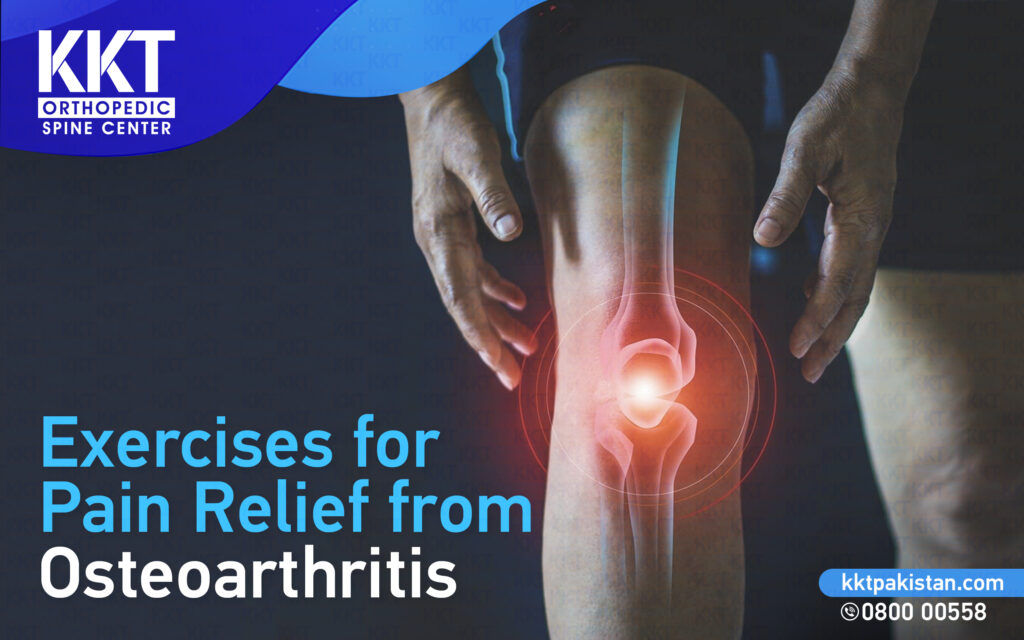
Overview: Osteoarthritis is one of the most common types of arthritis. The joints most affected by osteoarthritis include hands, hips, knees, and spine. Osteoarthritis affects millions of people worldwide. Exercises help in improving movement, joint strength, and flexibility. According to the Arthritis Foundation, exercises and physical activities play an important role in managing osteoarthritis. It helps reduce pain and improve mobility among osteoarthritis patients. Exercises also help maintain a normal healthy weight. Extra weight can put pressure and stress on your joints, knees, and hips. Exercises for osteoarthritis are very effective and beneficial. For an osteoarthritis patient, exercises can be a challenge. Which why it is recommended to consult a specialist first. Experienced physiotherapists provide suitable exercises taking your osteoarthritis stage under consideration. Best exercises for patients with osteoarthritis should include workouts to improve flexibility and muscle strength. Following are some exercises for osteoarthritis pain relief: Exercises for Osteoarthritis: Following are some of the different types of exercises for pain relief from osteoarthritis. Consult a specialist for exercising with osteoarthritis. Warm-up Exercises: Below are some simple exercises to warm up for osteoarthritis: Side bends While standing, follow the below-mentioned steps: Put both hands on your hips From your waist, bend on the one side Come back to your initial position Repeat the same stretch on the other side. Shoulder shrugs Keep your back straight and follow the below-mentioned steps: Raise your shoulders towards your ears Then lower them and repeat Torso rotations Follow the below-mentioned steps Stand straight with your feet at shoulder width Twist your upper body to your right side as far as you easily can Then rotate back to the center and repeat the same stretch on the left side. Strengthening Exercises: These exercises help strengthen your muscles which ultimately support your joints. Knee extensions You can perform this exercise while sitting on a chair. Sit on a chair while keeping your knee on slightly at the end of the chair Gently extend your leg out forward, straightening the leg. Then bend your knee back to the initial posture past 90 degrees (if easily possible) Repeat the same exercise on the other leg. Do this movement about 20 times. Lying leg lifts This exercise can be performed while lying on the floor or bed. Firstly, lie straight on the bed or floor keeping your knees bent and feet flat. Then keep your legs straight and extended Gently lift your leg up past 45 degrees, involving the muscles of the front thigh Maintain the position for a while Slowly bring your leg down and repeat the same on the other leg. Repeat this movement about 20 times. Completing 3 sets. Range-of-motion Exercises: These exercises help ease the stiffness and improve the range of motion of your joints. Double hip rotation Follow the following steps Lie straight on the floor knees bent and feet flat. Keep your shoulder flat on the surface as well. Slowly rotate your knees towards the right side onto the floor Hold the position for about 25-30 seconds. Slowly come back to the initial position Repeat the same on the left side Aerobic Exercises: These exercises are low impact and gentle exercises. they help strengthen your heart and lungs. Walking It’s just walking, right? Walking comes with a lot of benefits. Top of the list would be that walking improves the overall circulation. It also lowers our risk of fractures and strengthens the muscle. Swimming Aquatic exercises are also an ideal choice for someone who just started exercising. The buoyancy of water puts lesser pressure on the joints and provides resistance to the muscles. Pool exercises are very beneficial for people with osteoarthritis. Conclusion: For patients with osteoarthritis, certain physical exercises can be tricky. This is why one should consult a specialist first. You can have a detailed overview of the tips for exercising with osteoarthritis here. KKT Orthopedic Spine Center offers a revolutionary, non-surgical Canadian Technology treatment. The primary focus of KKT Treatment is to diagnose and treat patients suffering from spinal ailments. KKT treatment has a 93% of success rate with no known major side effects. For further details, you can get in touch with us through our patient-care line. One of our representatives will guide you to the best of their ability. Phone: 0800-00-558
Knee Arthritis: Exercises to Avoid
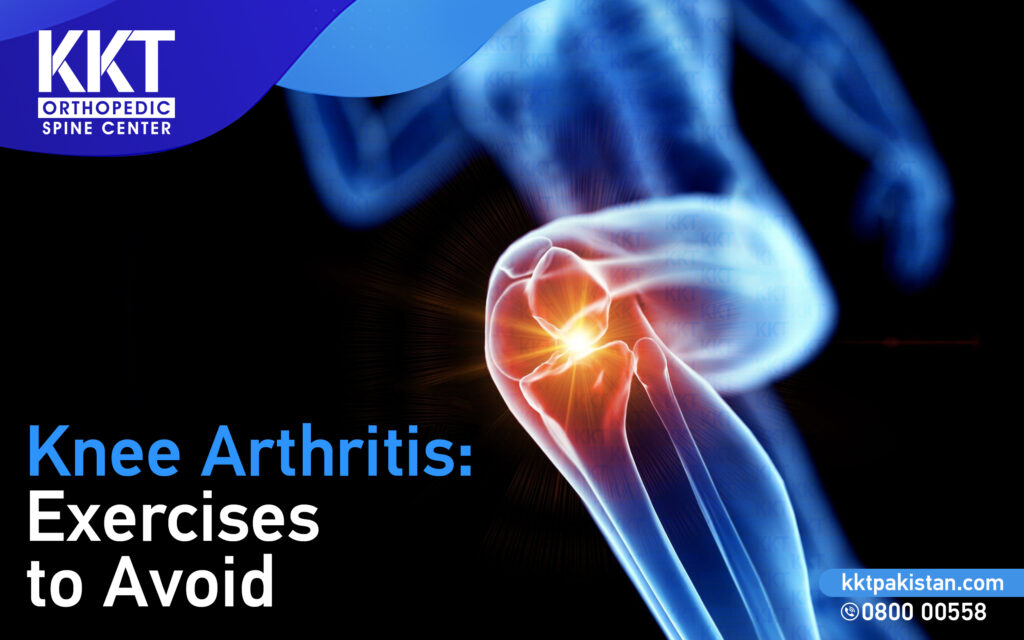
Overview: Knee pain is a common complaint among people of all ages. With osteoarthritis knee exercises or physical activity should be a part of your life routine. There are various exercises that can help improve the pain. But with knee arthritis, various exercises should also be avoided. Low impact exercises are beneficial but some exercises can put a strain on your joints. Hence, worsening the condition. In order to safely exercise for arthritic knee, seek the guidance of an experienced physiotherapist. This article consists of a number of knee exercises to avoid. Knee Arthritis: Exercises to Avoid! What exercises are bad for the arthritic knee? Any type of exercise that puts excessive pressure on your joints can increase inflammation. Following are some osteoarthritis exercises to avoid: Deep Lunge Weightlifting Deep Squats or jump squats Including any movements that involve turning directions quickly Deep Lunge: Lunges play an important role in strengthening your legs and hips. But if practiced incorrectly, they can result in pain. The deep lunge is basically a single-leg squat that can put excessive stress on your knees. However, with knee arthritis maintaining is a proper posture is difficult. If done incorrectly, it can damage the knee cartilage. Weightlifting: For strengthening exercises sometimes weightlifting is involved. But you shouldn’t practice it without professional supervision. As they can put a strain on your joints, or knees. Deep Squats or Jump Squat: Squats including both deep and jump squats can be useful for various people. But when it comes to knee arthritis patients, they can be really harmful. They exert excessive pressure on the knee and can result in a tear. Conclusion: Physical activity and stretching exercises for osteoarthritis can be beneficial and are essential for joint and bone health as well as for arthritis patients. But exercises that involve over-use of joints or quick turning should be avoided. If you have been diagnosed with arthritis, consult a specialist. If you want to learn more about tips for exercising with arthritis, click here. KKT Pakistan offers a revolutionary non-surgical treatment for the victims of spinal ailments, arthritis, back, and neck problems. If you feel your pain worsening, book an appointment with KKT’s orthopedic surgeons in Lahore, Karachi, and other metropolitan cities across Pakistan. KKT also has 20 centers worldwide. Want to learn more? You can also get in touch with us through our patient care line. Phone: 0800-00-558
Foods to avoid with Arthritis

Overview: Swelling and tenderness in your joints is called arthritis. It is a common joint-related condition. Arthritis can affect more than one joint at a time. Often affected joints include, hands, hips, knees or spine. There are several ways to manage arthritis. Some people consider change in their diet helps in managing arthritis. This article includes the foods to avoid with arthritis (rheumatoid and osteoarthritis). It also includes the changes patients should make in their diet. Symptoms of Arthritis: Symptoms vary depending on the type of arthritis. Commonly occurring symptoms of arthritis include your joints. For instance: Foods to avoid with arthritis: Following are the foods to avoid/limit if you have arthritis: Trans Fats: Small amounts of these fats are available in beef and dairy products. Trans fats reduces HDL (good cholesterol) on the other hand increases the bad cholesterol (LDL). This raise also increases the inflammation and risk of heart disease. The change in HDL and LDL can also result in obesity and heart disease. Trans fats makes it difficult for your body to fight arthritis. These fats are found in fried, processed or fast foods. Even though they are present in small amounts, they should be avoided. Saturated Fats: Food items like red meat (beef or lamb), cheese, pepperoni, salami, beef sausages and butter have saturated fats. Studies have shown that saturated fats can trigger inflammation. These fats can also cause risk of heart disease. Saturated fats should be consumed in moderation. They should be about lesser than 10% of your total calorie intake (Arthritis Foundation). Omega-6 Fatty Acid: Even though omega-6 fatty acids are essential for a healthy growth. Avoid the excessive and over-consumption of omega-6 fatty acids. Immoderate consumption can also trigger the release of inflammatory materials. Omega-6 fatty acid are found in: Limit your omega-6 fatty acid consumption. Sugary Items: It might be difficult to resist or limit sugary items like pastries, cold drinks and deserts. But effects of sugar are similar to saturated fats. Studies have shown that excessive intake of sugar also increases the risk of inflammation. According to a survey, less sugar intake results in weight loss. Losing weight improves the symptoms of Rheumatoid Arthritis. Consumption of excessive processed sugar can cause the release of inflammatory proteins called cytokines. Refined Carbohydrates: Refined carbs can also increase pro-inflammatory substances in your body. Hence, producing an inflammatory state. This makes arthritis worse. Refined carbohydrates are found in: Gluten: According to arthritis foundation, people with joint related diseases are sensitive to gluten or casein (dairy products). Gluten can also set of an auto-immune response in celiac disease patients. Gluten is found in: People with arthritis as well as celiac disease are sensitive to gluten. Seeking Medical Attention: It is best to have a healthy diet and prescribed treatments, besides daily multivitamins as supplements, but the Rheumatoid arthritis and Osteoarthritis diet plan should not include the above-mentioned food items. In case of any arthritis related symptoms. Book an appointment with KKT Pakistan. Here, arthritis and spinal ailments are treated without surgery and medications. KKT has a team of competent orthopedic surgeons in Lahore, Rawalpindi, and other metropolitan cities across Pakistan. For further information, you can contact us at the number given below, and one of our representatives will guide you to the best of their ability. Phone: 0800-00-558
Ways to manage Rheumatoid Arthritis (RA)
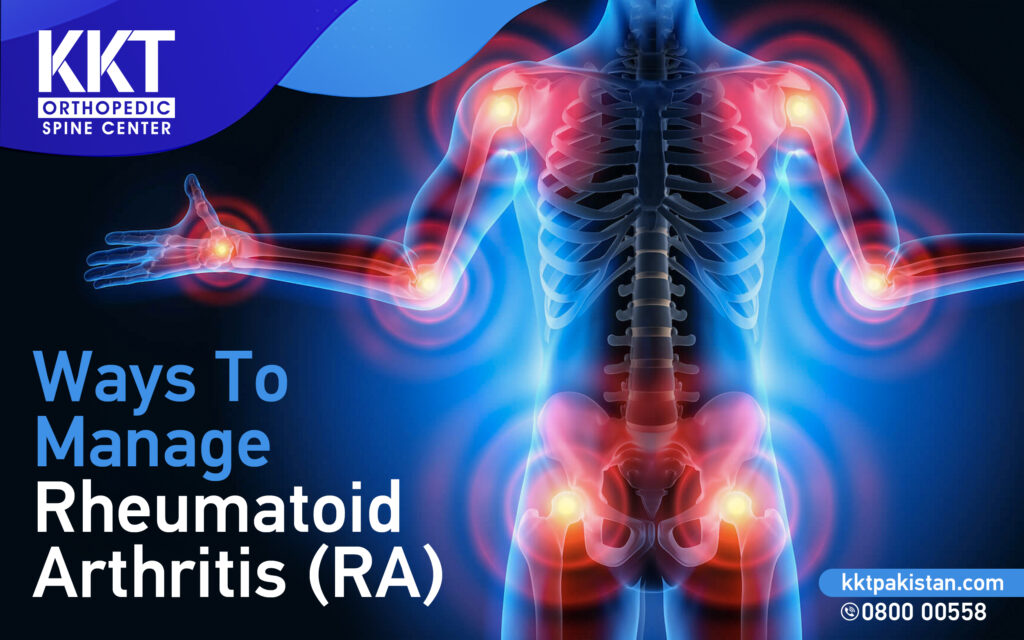
Overview: Rheumatoid arthritis is one of most common types of arthritis. RA is an autoimmune disorder, in which your immune system attacks itself (by mistake). This causes inflammation in the affected joints causing damage. Rheumatoid arthritis affects more than one joint at a time. For instance, both wrists or both knees. Commonly affected joints include, wrists, hands, ankles and knees. This joint related disease affects your daily activities. However, RA can be managed by making changes in your daily life. This blog contains some ways to manage rheumatoid arthritis. Hence, increasing quality of life. Signs and Symptoms of Rheumatoid Arthritis: Symptoms with RA can get worse over time. Some of the common symptoms include: Weakness and weight loss Signs in both affected joints Pain & stiffness in the affected joints Swelling and inflammation in more than one joint Some people also experience symptoms of RA that aren’t related to joints. Risk Factors for Rheumatoid Arthritis include: According to various researchers, there are many factors to determine the risk of RA in a person. These risk factors include: Age: Middle-aged people are most likely to develop RA Gender: Compared to men, women are more likely to have RA . Obesity: Excess weight increases the risk of RA Genetics or family history: Specific genes and/inherited genes increase the risk of RA. Ways to manage Rheumatoid Arthritis: However, RA can be managed by making changes in your daily life. Here are some ways to manage rheumatoid arthritis (RA). Heat therapy Quit smoking Physical activities Eat a balanced diet Improve your sleep Maintain a proper weight Heat Therapy: Heat increases the blood flow in the affected part and relaxes the muscles. Therefore, helps ease your pain. Quit smoking: Smoking can cause various health related problems. Researches have shown smoking to be a risk factor of developing RA. Smoking also worsens RA symptoms. Physical Activities: Being physically activities strengthens and increases mobility. Doing gentle exercises strengthens your joint muscles. Improve your sleep routines: Researches show that poor sleep worsens your pain and inflammation. Poor sleep increases the level of stress hormones in your body. Hence, increased flares. Besides this, sleep deprivation increases the pain severity. Maintain a proper weight: Excess weight can cause various problems for people with RA. It put excess stress and pressure on the joints. Which is why it’s very important to maintain a healthy weight. Consult a specialist in order to make healthy changes and making a dietary plan. When to seek medical attention: Rheumatoid Arthritis (RA) is one of an autoimmune disease. In case of increased pain in joints and muscles, seek medical attention. KKT Pakistan offers non-surgical treatment for the victims of spinal ailments, having 8 operational centers across Pakistan. KKT Pakistan has competent orthopedic surgeons in Lahore, Karachi, Rawalpindi, Peshawar, Faisalabad, Multan and Hyderabad. In case of any inconvenience, book an appointment with your nearest center. For further information, you can contact us through the below given number, and one of our representatives will guide you to the best of their ability. Phone: 0800-00-558 Phone: 0348-1112558