
Common signs of cervical stenosis
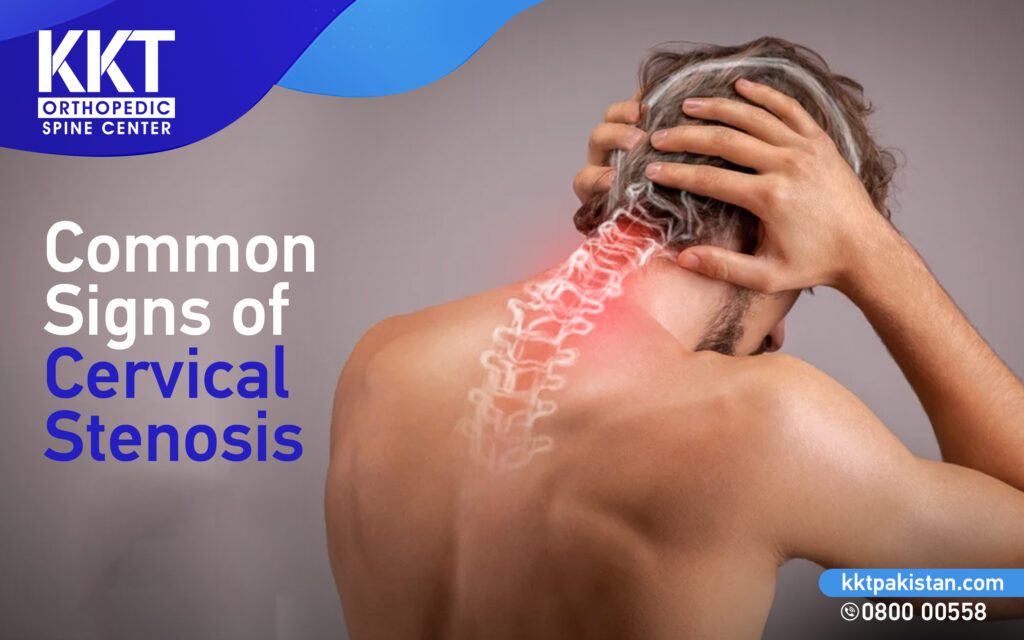
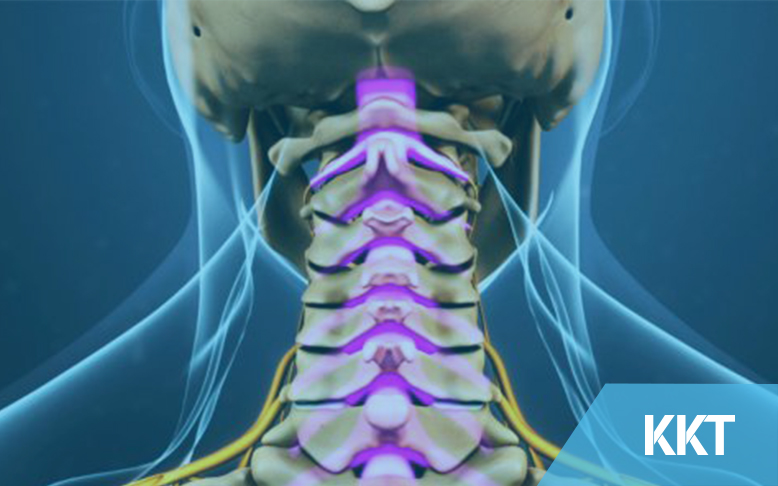
There are two types of spinal stenosis: cervical (neck) and lumbar (lower back) stenosis. Cervical stenosis is a common cause of neck pain. Bone spurs begin to grow on the vertebrae of the neck and joints of those vertebrae, causing the spinal canal passageway to narrow down and pressure the spinal cord and nerves. Causes Some people are born with less space in their spinal cord, and some get cervical stenosis as they age. The spinal disk becomes drier and begins to bulge. The bones and ligaments of the spine might thicken or grow more prominent due to arthritis or long-term inflammation. Other causes of spinal stenosis are as follows; Arthritis of the spine. Bone diseases such as Paget disease Defects or growths in the spine that were present from birth Narrow of the spinal canal that the person was born with A herniated or slipped disk, which often may have happened in the past. Injury that causes pressure on the nerve roots or the spinal cord. Tumors in the spine. Fracture or injury of a spinal bone. What are the signs and symptoms of cervical stenosis? Spine degeneration is the most common reason for cervical stenosis. As we age, our body loses water content, and our disks dry out and weaken. Ultimately, the following symptoms of cervical stenosis affect the disc space around the vertebrae. Tingling in arms and legs. Spasms in the leg make it challenging to walk. Numbness. Poor balance while walking. Problem urinating or having a bowel movement When to seek medical assistance? You should seek medical help when you feel severe signs of spinal stenosis, including: Numbness. Poor balance while walking. Problem: urinating or having a bowel movement. Worsening numbness and weakness of your limb. How is cervical stenosis diagnosed? A thorough investigation is necessary to determine the root cause of a neck problem, which involves an in-depth history review, a physical examination, and 3D spine X-rays. After conducting the history, taking physical assessment, and 3D X-rays, the doctor advises the number of sessions required to diagnose cervical stenosis. Make an appointment
Different Types of Spinal Injuries
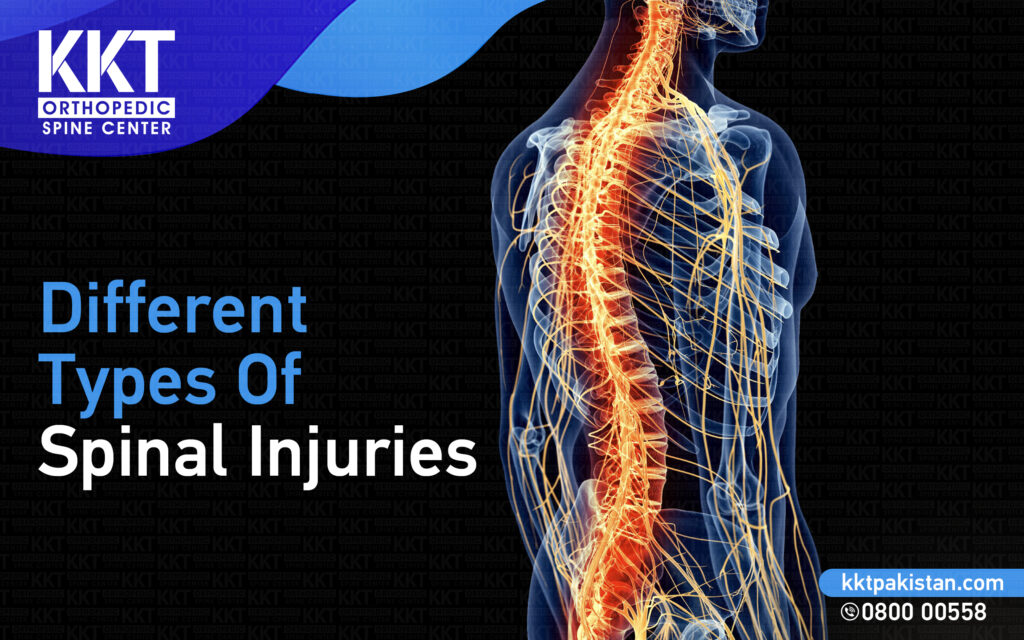
The purpose of the spinal cord is to transmit messages from the brain to the rest of the body. If the nerves get damaged after a spinal injury, one may lose several vital bodily functions. Therefore, it is crucial to comprehend how they differ and what symptoms are related to each level of spinal injury because there are many forms of these injuries. They are categorized as: External trauma is the most frequent cause of spinal injury, but there are also other reasons “non-traumatic” causes of spinal cord injury. Internal trauma causes include tumors, blood loss, and stenosis. Nearly, half of those who suffer from spinal injuries are between the ages of 16 and 30. The term “incomplete spinal injury” describes partial spinal cord damage. The location of the spine affected and the severity of the injury determines how much movement and feeling are possible. Results are determined by the health and medical background of the patient. You will get to know spinal injury types in this blog. What are the most severe types of spinal cord injury? The spinal cord’s cervical, thoracic, lumbar, and sacral segments all affect the severity of spinal cord injury. Basically, a different collection of nerves that govern the body is protected by each part of the spine. Therefore, depending on the area of the spine that is injured, there are different types and degrees of spinal cord injuries. The following are spinal injury types: Cervical Injury The cervical portion of the spine comprises seven vertebrae (C-1 to C-7) in the neck. It is closer to the brain so, any damage in the cervical can cause severe injury and affect a larger portion of the body. If there is any injury in the cervical area, it causes limited or absence of feeling or movement below the shoulder/neck. Thoracic Spinal Injury Fractures of Thoracic and lumbar spine fractures are the result of high-energy trauma; Car or motorcycle collision Fall from a significant height Sports accident Violent acts, such as gunshot wound Spinal fractures may also be caused by bone insufficiency. For example, people with osteoporosis, tumors, or other underlying conditions that weaken the bone can fracture a vertebra even during lower-impact events — such as falling from a standing height or twisting. These fractures may develop unnoticed over some time, with no symptoms or discomfort until a bone breaks. Lumbar Spinal Injury The lumbar spine comprises the lowest major portion of the spinal cord. However, it carries the most weight of any of the sections of the spine and therefore, features larger vertebrae than the thoracic and cervical sections of the spine. Injuries to the spinal cord in the five lumbar vertebrae (L-1 through L-5) generally result in some loss of function in the hips and legs but do not affect the functionality of the upper body. KKT Treatment KKT treatment offers the most sophisticated and highly effective non-invasive medical technology for spinal restoration. Our treatment has been proven to reduce or eliminate pain by re-aligning spinal vertebras back to their normal symmetrical positions. Our spinal care restores the body’s structural and neurological balance that has been affected by disturbances from the spine. This restoration reactivates the transmission of healing messages from the brain to the affected part of the body and vice versa. As a result, your own body’s rhythms and natural healing processes can begin. Book an Appointment.
Exercises for Spinal Stenosis to Avoid

Our body’s way of informing us that something is wrong is through pain. When back pain occurs our first instinct is to get some rest and use painkillers to reduce the ache somehow. For any musculoskeletal disorders, being physically active is highly recommended. Spinal stenosis is one of the spine-related conditions which occurs when the spine begins to narrow. This ultimately puts pressure on the spinal cord and nerve roots. People suffering should avoid certain exercises for spinal stenosis. This is why one should know that inflammation, pain, or other neurological symptoms might get worse. Several factors can lead to the narrowing of the spinal column. These can include injuries, and inflammation in discs and ligaments, therefore, compressing the nerves. Living with spinal stenosis comes with several symptoms including: Spinal Stenosis Exercises & Activities to Avoid: What can make spinal stenosis worse? Some of the activities or exercises for spinal stenosis to avoid include the following (but are not limited to): – Excessive Back Extension: Standing back stretches or extensions are one of the most common stretches people opt for after sitting for prolonged periods of time. Back extension(s) is the stretch that involves standing up straight, placing your hands on your hips, and leaning backward (as far as possible). This type of stretch helps the spinal cord but, in most cases, it can result in symptoms like pain. Try avoiding back extension exercises in order to avoid symptoms like numbness or more pain. – Long walks or runs: Running is one of the high-impact exercises causing a repetitive impact on the spine. This can lead to worsened back pain and other spinal stenosis symptoms. Moreover, long walks can also cause a stain on the leg or back muscles. Taking long walks over long distances can also exacerbate back pain. Instead, try short walks with increasing the pace in a modest manner. – Prolonged bed rest: Laying down on a bed with back pain is tempting, however, too much rest can put further strain. Staying physically active may help in reducing pain and improving quality of life. – Certain contact sports: Being physically active is good but avoid exercises or sports with sudden impact/contact. These sports might include, football, martial arts, soccer, etc. Sports like these are some examples where healthy physical activity can cause a sudden tear. When to seek medical attention? KKT offers revolutionary non-surgical Canadian Orthopedic Treatment for various spinal ailments, including back pain, neck pain, and spinal stenosis. For booking an appointment with KKT orthopedic consultants, click on the link below.
What is Cervical Radiculopathy? Causes and Symptoms
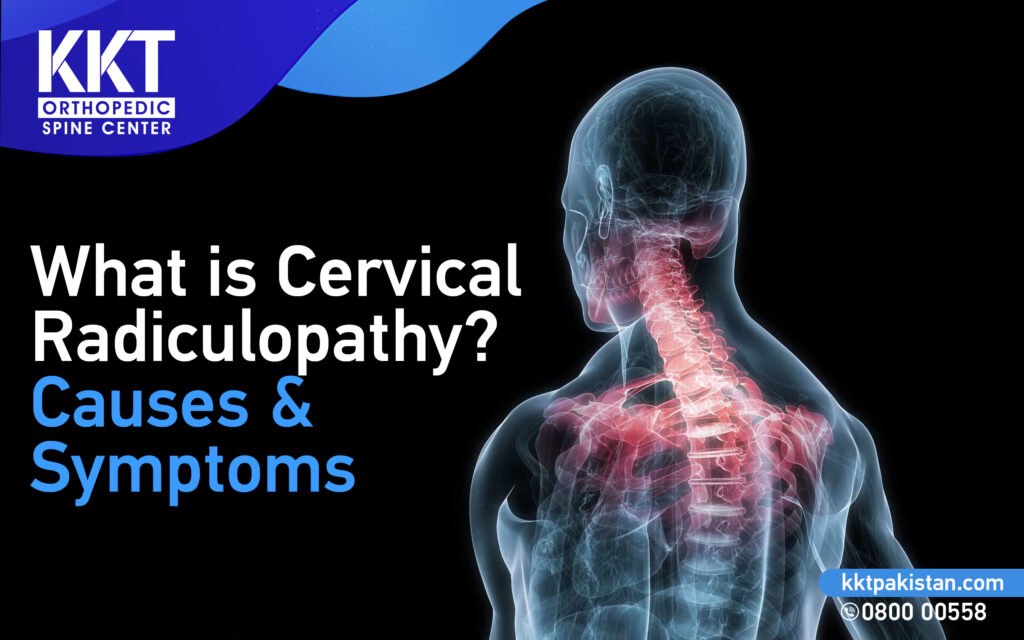
Also known as, Pinched Nerve. It occurs due to compression on any nerve in cervical spine. Damage to the nerve can result in numbness, weakness or even pain radiating down the shoulder to the arm. There are several reasons behind cervical radiculopathy. Degeneration, disc herniation as well as bone spurs can cause pressure on the nerve. Among young people, it can also be caused due to an injury resulting in herniated disc. Anatomy: – Human spine is made up of several bones called vertebra. There are 24 vertebrae in your spine. They create a canal protecting your spinal cord. Our spine is divided into 4 sections called: Cervical (C) Lumbar (L) Thoracic (T) Sacral (S) However, the seven vertebrae (C1-C7) starting from the base of the skull forming the neck region are make up the cervical spine. Our spine consists of, Nerves Spinal Cord Intervertebral Discs: The two major components of discs are, Annulus Fibrosis and Nucleus Pulposus. Symptoms: – Most common symptoms of cervical radiculopathy is pain in the neck, shoulder, arms and upper back. Cervical Radiculopathy often affects only one side of the body. Some other symptoms of cervical radiculopathy include: Motor problems Muscle Weakness Numbness and weakness in the arm and shoulders Causes: – There can be multiple reasons behind cervical radiculopathy or pinched nerve, for instance: Herniated Disc Cervical Spinal Stenosis Cervical Degenerative Disc Herniated Disc: – Herniated Disc (also known as slipped disc) is when a portion of nucleus is pushed out of annulus fibrosis. It is a result of a tear or crack. This leak-out can inflame the nerve in neck region resulting in cervical radiculopathy. Herniated disc can occur due to an injury or degeneration. Injury is the most common cause of herniated disc in younger people. In an injury, force on the cervical spine causes herniated disc. Slipped disc is also common among adults (middle-aged). Cervical Spinal Stenosis: – Cervical spine consists of seven vertebrae (C1-C7). This is a condition in which the narrowing of spine takes place in the neck region. This compresses the nerves thus resulting in inflammation. Pinched nerve due to cervical stenosis is known as cervical radiculopathy. This condition is common among people above 50. Cervical Degenerative Disc Disease: – Bone spurs can also cause cervical radiculopathy due to degenerative disc or cervical osteoarthritis. However, large bone spurs can irritate the nerve root causing inflammation. Symptoms of degenerative disc causing cervical radiculopathy are also similar. When to seek treatment? For some people the symptoms can get better with time but for others the pain can stay longer. Consult your health care provider in case you feel your pain worsening. Therefore, the treatment procedure highly depends on the symptoms of the patient. KKT Pakistan offers non-surgical treatment for the victims of spinal ailments, back and neck problems. The Treatment primarily focuses at the root cause of the pain. KKT has 8 operational centers across Pakistan. Cities include Lahore, Karachi, Rawalpindi, Peshawar, Faisalabad, Multan and Hyderabad. In case of any inconvenience, book an appointment with your nearest center.
Musculoskeletal Disorders: An Overview
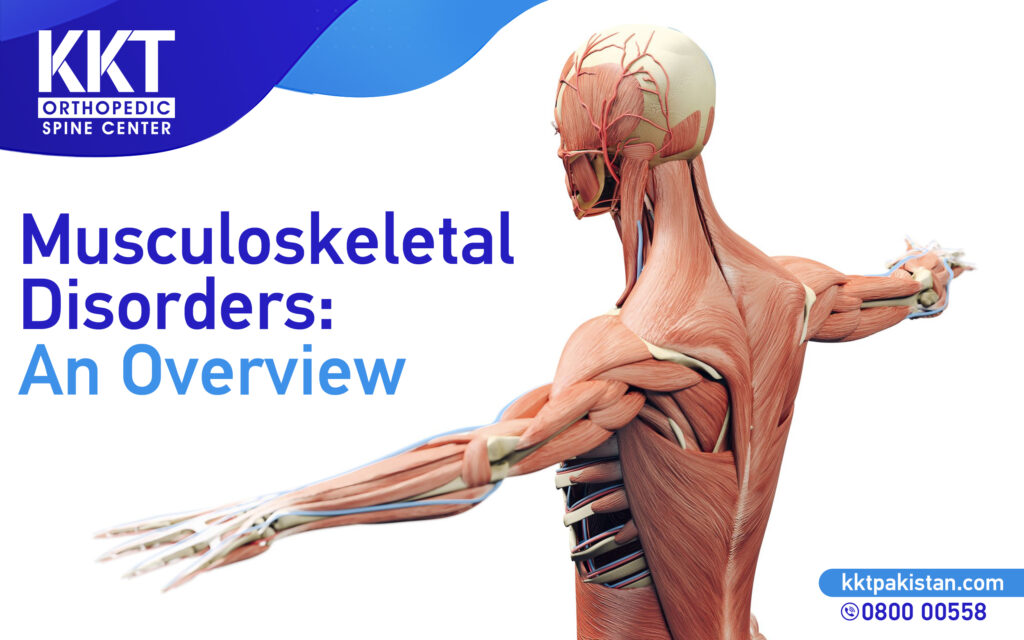
Musculoskeletal Disorders are the diseases related to muscles, joints, cartilage, spinal discs and nerves. Diseases related to spine and back are called spinal disorders. Brain controls the whole body via spinal cord. Spinal cord transmits messages all over our body. It is made up of several bones called vertebrae. Each vertebra is separated by a cartilage disc. Our spine is divided into four parts: Cervical (C) Thoracic (T) Lumber (L) Sacral (S) Musculoskeletal Disorders: – There are many known musculoskeletal and spinal disorders. For example: Sciatica Scoliosis Kyphosis Bulging Disc Fibromyalgia Osteoarthritis Herniated Disc Spinal Stenosis Rotator Cuff Injury Degenerative Disc Disease 1. Sciatica: Sciatica is pain caused due to the pressure or irritation to the sciatic nerve. This pain radiates from lower back and buttock down to the legs. The symptoms of sciatica are mostly result of lower back (L4-S1 vertebrae) disc disorder. It is a relatively common form of lower back and leg pain. In women, sciatica may also occur during pregnancy because of the weight of fetus pressuring the sciatic nerve while sitting. The most common cause of sciatica is herniated or slipped disc. Sciatica can also be a result of bone spurs and spinal stenosis in lumbar spine. Sciatic nerve is the longest nerve in the human body, extending from lower back to the legs. The five nerve roots (two from lumbar spine and three from sacrum) form the right and left sciatic nerve. Risk factors of Sciatica includes: Age: with time the discs deteriorate, developing bone spurs. Sitting for prolonged periods (sitting disease), puts pressure on the nerve. Diabetic Neuropathy leads to nerve damage in hands and legs causing sciatica. 2. Scoliosis: Scoliosis is an abnormal side-to-side curve of the spine (spinal deformity). This condition occurs when your spine is either in “S” or “C” shape (rotated sideways). People with scoliosis have uneven shoulders. In most cases, scoliosis is mild but can increase as the child grows. Severe curvature can also affect the lungs or coronary heart function. Children with mild scoliosis need to wear braces to stop the curve. Scoliosis can affect any part of the spine however it is commonly found in upper or lower spine. There are two major types of scoliosis; structural and non-structural. Structural Scoliosis has four types, including: – Idiopathic Scoliosis: Adolescence or earlier in childhood Congenital Scoliosis: Present at birth Degenerative Scoliosis: among adults due to degeneration Neuromuscular Scoliosis: Among people with neuromuscular disorders (like: muscular dystrophy or cerebral palsy) 3. Kyphosis: Kyphosis is a forward/outward rounding of the upper (thoracic) spine. Similarly, the severe inward curvature in neck or lower back are called lordosis. This rounding appears as a hump on the back. This deformity is also known as hunchback. Usually, patients need to exercise and wear braces to improve the posture. People with severe stage can also develop breathing problems. Severe spinal curve requires surgery to reduce symptoms. Naturally, spine contains curves that help you to balance. If these curves increase or decrease than the normal curvature, it’s difficult to stand straight. Natural curve of thoracic spine is between 20-45 degrees. A spinal curvature of more than 50 degrees is a sign of kyphosis. Major types of Kyphosis include: Postural Kyphosis: Bad posture and slouching stretches the muscles holding vertebrae. Hence pulling them out of their normal position. Congenital Kyphosis: Present at birth because spine doesn’t develop properly. Scheuermann’s Kyphosis: Vertebrae have a wedge shape causing the spine to look rounded. This type of kyphosis is usually diagnosed in teens and boys (more than girls). 4. Bulging Disc: – Our spine consists of vertebrae with intervertebral disc in between. It is one of the musculoskeletal disorders in which disc moves from its original position. It occurs when the spongy intervertebral disc is compressed and bulges out. Patients might have minor or no pain as it is not at the severity level i: e: – Herniation. Disc Bulge can also lead to numbness and weakness in legs. Age-related wear and tear can result in bulging discs as well. Spinal decompression in one of the treatment recommended by the doctor. In a bulging disc, the outer layer (annulus fibrosis) remains intact unlike in herniated disc. However even though the outer layer is intact, the bulge can still compress the nerve. Some of the Symptoms include: Symptoms include: Reduced Mobility in legs Pain in feet and thighs (not common) Difficulty in lifting things and walking Tingling in fingers, neck and shoulders Back pain as well as sciatica (if disc bulge is located in lumbar spine) 5. Fibromyalgia: Fibromyalgia (also referred as widespread pain) can be treated and managed, effectively. It is a condition which co exists with various other conditions. Fibromyalgia can be caused due to genetics, mental stress, surgery or any physical injury or trauma. Fibromyalgia is more common among women due to a hormone called, estrogen. Because of the high levels of estrogen, brain’s natural painkillers work more effectively during a pain-related situation. Due to a drop in the levels of estrogen, these pain killers don’t work as effectively. Symptoms of fibromyalgia often begins after a physical trauma or surgery. Primary symptoms include: Fatigue Problem in sleeping Pain all over the body Headaches specially migraines Risk factors of Fibromyalgia include: – Age: – Risk of getting Fibromyalgia increases as you get older. Rheumatoid Arthritis (RA): – People with RA are more likely to have Fibromyalgia. 6. Osteoarthritis: Osteoarthritis is one of the major forms of Arthritis. It is a result of breakdown of the cartilage in our joints and bones over time. Osteoarthritis majorly affects the joints that bear weight including hip joints, knee joints and spine. It can also affect any other joint in your body. Osteoarthritis often affects older and obese people. It is a degenerative joint disease. In men, osteoarthritis usually occurs before 45 years. On the other hand, in females it may occur after 55 years. Symptoms include: Stiffness Swelling Pain in the joints Loss of flexibility Joint pain and tenderness 7.
5 Signs you are suffering from Spinal Stenosis
Does your back pain appears and disappears depending on what physical activity you are doing? You might be suffering from spinal stenosis. This is a back condition which usually occurs in men and women after they turn 50 and as the age goes up it worsens. It can be found along the spine. When the spinal canal narrows, the spinal cord and nerves start receiving more pressure and this starts the pain. Symptoms: It is quite difficult to identify spinal stenosis right away, Look out for the following symptoms: 1- Unpredictable back pain: Your pain comes and goes as it pleases. Sometimes it is excruciating pain, at other times it is very mild and sometimes it completely vanishes away. 2- Signs of Sciatica: Pins and needles, feeling numb and tingling can be felt across your lower back, legs and hips. 3- Physical activities may induce pain: Sleeping in a distorted position, riding a horse and even just a run can increase your pain. The pain can be triggered pretty easily. 4- Some Positions might fade your pain: If you have been standing for a long time and then you sit if takes the pain away as the nerves get a little room. 5- The pain fades away slowly: When you give yourself a little break then you feel that the pain is fading away slightly. If you are facing all of these symptoms mentioned above. Consult your doctor right away and if he recommends surgery and dangerous drugs, Then you know what to do. Head on over to kkt.technologycastle.com/ and book your online appointment for a pain free, surgery free and drug free treatment. We care, we perform and you get the results! [/et_pb_tab][et_pb_tab title=”اردو” _builder_version=”3.0.95″ tab_font=”||||” body_font=”||||” body_font_size=”18″ body_font_size_tablet=”18″ body_font_size_phone=”18″ background_size=”initial” background_position=”top_left” background_repeat=”repeat” use_background_color_gradient=”off” background_color_gradient_start=”#2b87da” background_color_gradient_end=”#29c4a9″ background_color_gradient_type=”linear” background_color_gradient_direction=”180deg” background_color_gradient_direction_radial=”center” background_color_gradient_start_position=”0%” background_color_gradient_end_position=”100%” background_color_gradient_overlays_image=”off” parallax=”off” parallax_method=”on” background_blend=”normal” allow_player_pause=”off”] ٥ علامات جس سے ظاہر ہوتا ہے کہ آپ کو سپاینل سٹینوسس ہے کیا آپ جب کوئی بھی کام کرتے ہیں یا جسم کو حرکت میں لاتے ہیں تو کمر کا شکار بن جاتے ہیں؟ یہ سپاینل سٹینوسس کی علامات بھی ہو سکتی ہے. یہ مرض مردوں اور خواتین دونوں میں ہوتا ہے اور اس وقت لوگ اس کا شکار بنتے ہیں جب ان کی عمر ٥٠ یا اس سے زیادہ ہوتی ہے. جیسے جیسے عمر زیادہ ہوتی ہے، درد کی شدد بھی بڑھ جاتی ہے. اس کا تعلق ریڑھ کی ہڈی سے ہے. جب سپاینل کنال تنگ ہو جاتا ہے تو اس سے ریڑھ کی ہڈی پر دباؤ زیادہ پڑتا ہے اور درد بڑھ جاتی ہے. علامات غیر متوقع کمر درد یہ درد کبھی ہوتا ہے اور کبھی نہیں. کبھی یہ شدد اختیار کر لیتا ہے اور کبھی زیادہ محسوس نہیں ہوتا. شیاٹیکا کی علامات آپ کو کمر کے نچلے حصے، کولہوں اور ٹانگوں میں درد یا الجھن رہتی ہے. چند روز مرہ کے کام غلط طریقے سے سونا یا بھاگنے سے درد بڑھ سکتا ہے. چند پوزیشنز سے آپ کا درد کم بھی ہو سکتا ہے اگر آپ کھڑے ہیں اور درد میں مبتلا تو بیٹھ کر دیکھیں، درد کم محسوس ہو گا. درد کا آہستہ سے ٹھیک ہونا جب آپ تھوڑا آرام کریں گے تو درد آہستہ آہستہ ٹھیک بھی ہو سکتا ہے. اگر یہ درد آپ کی زندگی کو اجیرن بنا رہا ہے تو KKT سے ابھی رابطہ کیجئے تاکہ بغیر سرجری کے آرام پا سکیں. [/et_pb_tab][/et_pb_tabs][et_pb_button admin_label=”Book Now” button_url=”https://kktpakistan.com/make-an-appointment/” button_text=”Book Now” button_alignment=”left” _builder_version=”3.0.105″ saved_tabs=”all” background_color=”#7EBEC5″ url_new_window=”off” background_layout=”light” custom_button=”off” button_icon_placement=”right” /][/et_pb_column][/et_pb_row][/et_pb_section]