
Frozen Shoulder: Symptoms & Causes
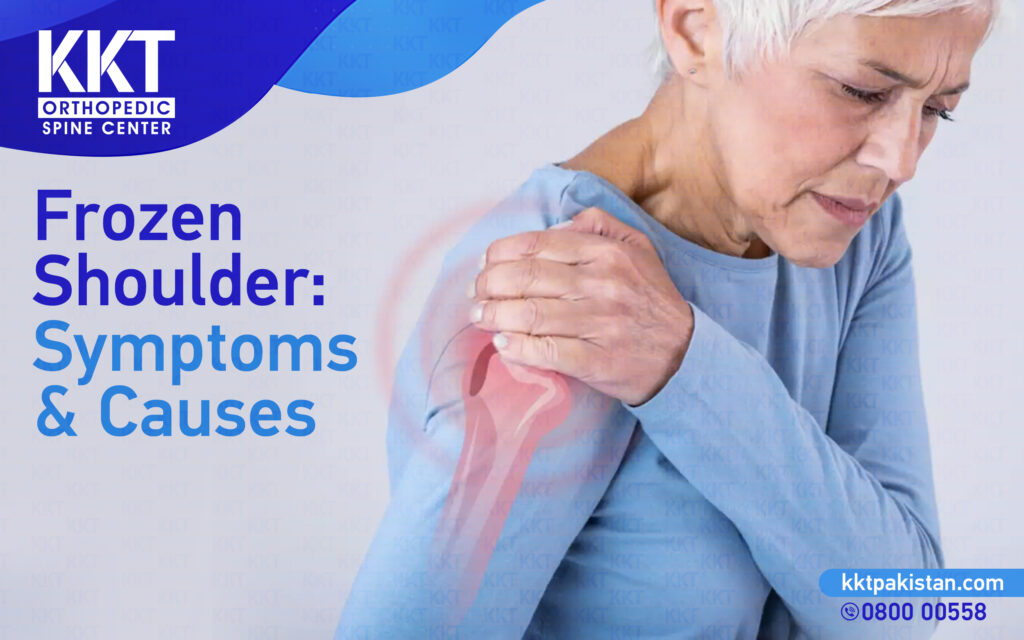
Frozen shoulder also known as adhesive capsulitis, is one of the common causes of shoulder pain and stiffness. This causes difficulty in moving the arm, therefore, reducing the mobility of the shoulder. The frozen shoulder affects the shoulder joint (the ball and socket joint), i.e., one of the most mobile joints in the human body. Symptoms of frozen shoulder(s) develop slowly and get worse over time. Symptoms of Frozen Shoulder: Frozen shoulder signs and symptoms develop over time in three stages; freezing, frozen, and thawing. 1. Freezing stage: What are the first signs of frozen shoulder? The freezing stage is the initial/beginning stage of a frozen shoulder. It is when the shoulder becomes stiff and causes pain when moving. The pain may get worse with time and at night. The freezing stage lasts from six weeks to nine months. The shoulder’s range of motion is limited during this time. 2. Frozen stage: This is the second stage of a frozen shoulder where the pain might get better but stiffness worse. A stiff shoulder makes it difficult to perform various routine activities. The frozen stage lasts for about four to twelve months. 3. Thawing stage: The shoulder stiffness begins to get better. The thawing stage lasts about 5 to 24 months. Risk factors of Frozen Shoulder: What is the main cause of frozen shoulder? One of the major causes is not moving the joint for a longer period (due to surgery or injury). Some other factors may also increase the risk of developing a frozen shoulder. These factors include the following: – Age and gender: People in their 40s to 60s are at a higher risk of developing frozen shoulder(s). When it comes to gender, women are at a higher risk compared to men. – Diabetes: Frozen shoulder occurs in 10% to 20% of people with diabetes mellitus. If you have diabetes, the risk of a frozen shoulder occurring increases. Among diabetics, shoulder stiffness occurs for a longer period before the thawing stage. – Shoulder injury, e.g., rotator cuff injury: An injury to the shoulder like a rotator cuff injury leading to restricted movement of the shoulder increases the risk of a frozen shoulder. – Other health conditions: Some other health-related conditions include stroke, hypertension, hypotension, Parkinson’s disease, and heart disease. Movement of the arm and the shoulder are limited/restricted with a stroke, therefore, increasing the risk of frozen shoulder. Preventing Frozen Shoulder Symptoms: One of the major risks of a frozen shoulder is limited/restricted shoulder movement after surgery/injury. To prevent this, consult your physician regarding exercises that can be performed. How to cure frozen shoulder quickly? There are several non-surgical methods to treat frozen shoulder(s) at home. Following are some of the exercises for treating adhesive capsulitis: – Finger walk: Follow the steps mentioned below: Stand in front of a wall, facing it and with about 3 quarter arm distance away. At the waist level, reach out and touch the wall with the fingers of the affected arm/shoulder. Slowly walk your fingers up the wall with your elbows slightly bent. Keep going until your arm reaches your shoulder level or till the point, you easily can. Make sure that the walk is being done by the fingers and not the shoulder muscles. Slowly lower your arm and repeat. Perform finger walks ten to twenty times a day. – Cross-body reach: Follow the below-mentioned steps: Sit/stand, and use the unaffected arm from the elbow to lift the stiff arm/shoulder. Gently bring it up and across your body. Exert gentle pressure, stretching the shoulder. Hold the stretch for about 15 to 20 seconds. Repeat this up to 10 to 20 times a day. When to seek medical attention? In case of increased pain in the shoulder, consult a physician. KKT Orthopedic Spine Center offers revolutionary non-surgical treatment for rotator cuff injury and other spine-related ailments. Book your appointment with KKT and get relief from your pain without any surgery. KKT Pakistan has highly qualified orthopedic consultants in Lahore, Karachi, Peshawar, and other metropolitan cities across Pakistan. For booking an appointment, click on the link below.
How to get relief from neck and shoulder pain?

There are several reasons behind neck pain and shoulder pain. In most cases, it is commonly caused due to an accident or injury. However, sometimes there also can be a serious medical condition behind the pain. The skull is supported by the muscles, bones, and ligaments in the neck and any abnormalities can lead to stiffness and pain in the neck. This pain can also be accompanied with: Numbness Weakness Stiffness Tingling Soreness or spasms Neck pain and Shoulder pain: Sitting on the desk in the office the entire day in the same position can lead to pain in the neck. There are various precautions, gentle exercises, and home remedies to relieve neck and shoulder pain. How to get relief from neck and shoulder pain? Following are some of the ways for neck & shoulder pain relief: Rest Ice and heat therapy Use the right pillow for your neck at night Improve your sitting and standing posture Gentle exercises and stretches for the neck and shoulders How to prevent neck & shoulder pain? One of the major reasons behind neck pain is bad or poor posture. In order to prevent neck pain simple daily life changes can help, for instance: While working for prolonged periods of time or traveling for long distances, take short breaks in-between. Keep your screen (laptop or computer) at eye level Make sure you are practicing a proper posture, i.e., your shoulders, ears, and hips are aligned. Avoid tucking the phone in between your ear and shoulder The weight of a heavy bag on your shoulders can put a strain on your neck, so avoid lifting heavyweight. While sleeping, ensure that your head, neck, and spine are aligned. Causes of neck pain & shoulder pain: As mentioned earlier, there are several reasons behind neck and shoulder pain. Below is the list of the most common causes behind it: Rotator cuff injury: Our shoulder joint consists of a group of muscles and tendons for stabilization, known as the rotator cuff. Injury, trauma, or tear in the rotator cuff can make it difficult for you to move your arm. Other major causes of rotator cuff injury include: Overuse Acute injury Wear and tear of the joint Poor posture Acute tear due to a fall, injury, or while lifting a heavy object. Whiplash injury: Whiplash is caused due to the sudden back-and-forth movement of the head. This results in tearing muscles, ligaments, or tendons of the neck. Whiplash injury can also be caused due to physical abuse, sports-related injuries, and accidents or trauma. Other causes of whiplash injury include: Horseback riding Falls Cycling collisions Blows to the head with a heavy object Cervical Spondylosis: This condition refers to the wear and tear in the cervical spine affecting the joints and discs. Cervical spondylosis is an age-related condition resulting in severe pain and stiffness in the neck. Common causes of cervical spondylosis include: Bone spurs Herniated or slipped disc Injury to the spine Lifting heavy objects or repetitive movements A pinched nerve in the neck: The pinched nerve in the neck is also known as cervical radiculopathy. Herniated or slipped discs in the cervical spine can cause cervical radiculopathy. The pinched nerve in the neck can cause neck and shoulder pain radiating from the cervical spine down to the arm. Other symptoms of cervical radiculopathy include: Pain radiating down: Chest Upper back Herniated or Slipped disc: Due to a fall or injury to the spine, the inner portion (the nucleus) bulges out, this is known as a herniated or prolapsed disc. Disc herniation is also known as a slipped disc. This bulged-out disc can compress the nerve roots causing pain, numbness, and tingling along that nerve’s pathway. Slipped disc in the neck can lead to: Shoulder pain Pain radiating down the arm Numbness and tingling Poor posture and sleeping position: Do you often wake up with neck pain? Poor sleeping posture or the wrong pillow can be to blame. Moreover, sitting in an incorrect posture for prolonged time periods can also lead to neck pain as it can strain your neck muscles. Poor posture can result in stiff neck and shoulder pain as well. To prevent neck pain, practice the above-mentioned precautionary measures and improve your posture. Frozen Shoulder: The cause of frozen shoulder is unknown however, its major symptom includes aching or dull pain in the outer shoulder. When to seek medical attention? If you feel neck or shoulder pain when you wake up in the morning or any of the signs of the above-mentioned conditions consult an orthopedic specialist. KKT Orthopedic Spine Center offers a revolutionary and sophisticated Canadian technology spinal treatment. In case of neck pain, book your appointment with KKT Orthopedic Consultants and get relief from your pain without any surgery. KKT Pakistan has highly qualified orthopedic surgeons in Lahore, Karachi, Peshawar, and other metropolitan cities across Pakistan. For booking an appointment, click on the link below.
Shoulder Pain: Causes, Diagnosis & Treatment
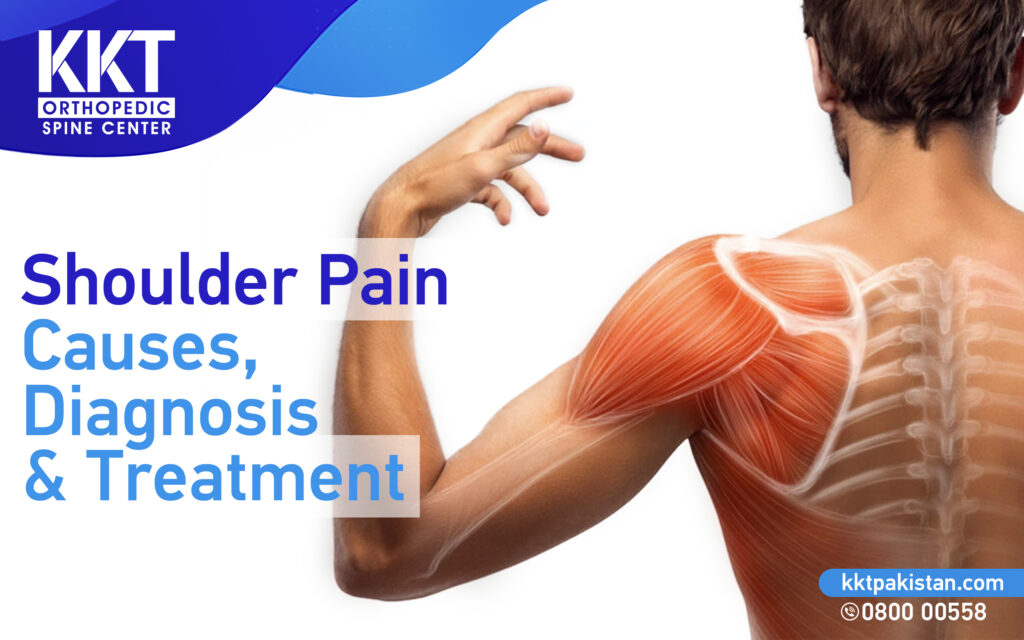
Our shoulder joint has a wide range of motion and rotation capability. Any injury or disease related to this joint can cause severe shoulder pain. Here’s everything you need to know about shoulder joint’s anatomy, conditions and their treatment. Shoulder Anatomy Shoulder joint is made up of various bones, joints, tendons and muscles. This is the most moveable, complex and one of the largest joints in the human body. It consists of four joints. Including: The shoulder joint itself is known as Glenohumeral Joint (ball and socket joint). The point where humerus and scapula meet is the shoulder joint. The three bones of shoulder include Shoulder Pain: Causes There can be a number of causes behind shoulder pain for instance: – Shoulder Osteoarthritis: Osteoarthritis is a joint related disease. It occurs when the cartilage degenerates or tears down resulting in swelling in the joint. Our shoulder consists of two major joints GH & AC. Osteoarthritis of shoulder is found mostly in Acromioclavicular (AC) joint. It affects many people but is more common in older people i: e: above 50 (due to aging). In younger people, osteoarthritis can be a result of an injury (fracture or dislocation). Osteoarthritis (OA) of the shoulder can also be caused due to any injury to the shoulder. Even an infection or natural wear and tear can cause it. Some of the symptoms include: – Frozen Shoulder: Frozen shoulder is a condition that involves pain and stiffness in the shoulder joint. Shoulder pain due to frozen shoulder builds up gradually. Frozen shoulder takes about 6 months to 2 years, until it’s normal again. It is also known as Adhesive Capsulitis. Frozen shoulder develops when the shoulder capsule (connective tissue) becomes stiff and thick due to which it’s difficult to move the joint. Hence, it can cause: – Frozen shoulder’s treatment includes exercises and pain medication. Stages of Frozen Shoulder: – There are three stages involved with frozen shoulder: – 1: – Freezing stage (pain gets worse) 2: – Frozen stage (Stiff shoulder) 3: – Thawing stage (Motion starts getting better) Causes of Frozen shoulder: – Frozen shoulder is more common among women then men. Some of the other reasons behind frozen shoulder include: – Rotator Cuff Injury: Rotator cuff is a group of four muscles and tendons. This group of muscles and tendons helps stabilize the shoulder. Acute injuries or overuse causes rotator cuff tear. Some of the rotator cuff injuries include: Rotator cuff tendinitis directly affects the muscles and tendons however it can also occur due to a fall or tear in the tissues. It is the most commonly injured part because rotator cuff tendons have a tight space to move in. The main causes of rotator cuff tear include: – Symptoms: – Symptoms of rotator cuff can appear months or even years after being damaged. Common symptoms include: Other Conditions: – Signs of pinched nerve include: Symptoms of shoulder dislocation may include: – Shoulder Pain: Diagnosis The cause of exact shoulder pain can be difficult to identify as symptoms of all problems cause similar signs. Firstly, doctors start from a physical exam. It includes specifically checking for: – For further examination, a number of imaging tests are carried out, including: – When to seek treatment? Don’t ignore the warning signs of an injury. Signs can appear after or during an accident. Seek medical attention if your pain is getting worse. In case of any shoulder injury, immediately go to a hospital. Shoulder Pain: Treatment Treatment options vary from condition to condition. For dislocation your doctor may: – Most fractures related to scapula can be treated without surgery. For pain and many other issues doctors prescribe medications and several shoulder exercises. However, there is another non-invasive treatment option like treatment via Sound waves by KKT Pakistan. This treatment aligns the spine and reduces pain. KKT Orthopedic Spine Centre is located in various locations across Pakistan. KKT treatment: –