
Facts about Whiplash Injury you should know

Whiplash injury is one of the common reasons behind chronic neck pain. It occurs due to sudden neck movement or bending forcibly (head thrown forward-backward). This neck-related injury involves discs, nerves, muscles, and neck tendons. This can lead to headaches, neck pain, and related symptoms. Even though you might have heard about this condition, there are some facts about whiplash you should know. What are the symptoms of Whiplash? Some of the whiplash injury symptoms of this condition include the following: Facts about Whiplash Injury: It can occur at any time due to various reasons. Other causes of this condition can include sports like football, and boxing, or due to a fall or slip. Moreover, physical abuse can also lead to this neck-related injury. Some of the facts include the following: – Symptoms of whiplash are not immediate: Sometimes people don’t feel symptoms of whiplash for days or even weeks after the accident. The most common symptoms of this condition include neck and shoulder pain. These symptoms will develop over the span of a few days/weeks. Other symptoms include the following: – Women are more likely to experience whiplash than men: Several factors affect the symptoms of whiplash, their severity, or their length. These factors include your age, gender, posture, and physical condition. As you age, your neck muscles lose strength and flexibility. Women experience whiplash injury more compared to men, statistically. The primary reason behind this is the smaller neck bones in women. Moreover, this condition can be worsened due to incorrect posture during the accident. – Elder people are at a higher risk of suffering from whiplash: As people age, they experience decreased muscle flexibility, limited movement, etc. Moreover, older people are more likely to suffer from a whiplash injury due to several degenerative changes, arthritis, etc. – Whiplash injury doesn’t always occur due to a car accident: A car accident isn’t the only reason/cause of whiplash injury. This injury is associated with abnormal neck motion causing a strain or damage to the neck muscles. Some other causes of this injury include the following: When to seek medical attention? In case of neck or back pain, kindly get in touch with KKT Orthopedic Spine Center. For booking an appointment at your nearest KKT center, click on the link below:
Neck Arthritis: Exercises to Avoid
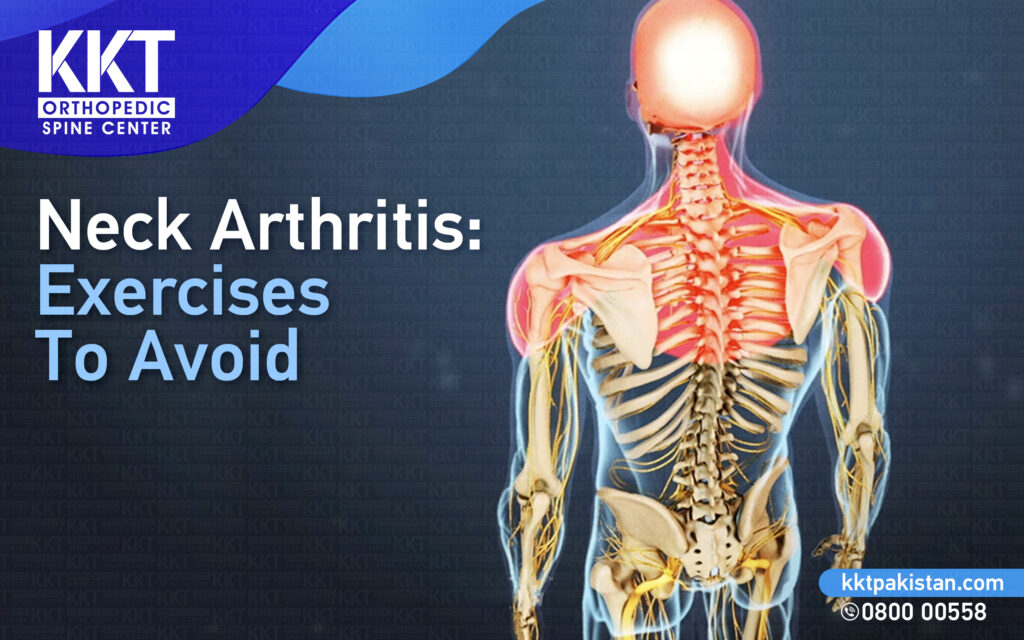
One of the reasons behind neck pain can be neck arthritis. This is a joint-related condition causing swelling and inflammation in one or more joints. But what causes arthritis in the neck? Neck arthritis occurs due to damage to the facet joints or disc(s) in the cervical spine/neck. Arthritis in the neck and headaches have a close connection. One of the osteoarthritis in the neck symptoms includes a headache. There are several exercises that can help with neck arthritis, strengthen the muscles and therefore, reduce the pressure. However, along with being beneficial, there are some neck arthritis, exercises to avoid. Please note that only some exercises are to be avoided not all exercises. Depending on the severity and cause of the neck pain, exercises might help. Note that don’t perform exercises without an expert’s opinion or instructions. Neck Arthritis: Exercises to Avoid Several things can result in an increase in neck pain. Even by looking up and activities involving holding your head in the same position for prolonged periods of time. Neck pain can occur due to several different reasons like cervical radiculopathy, osteoarthritis in the neck, or muscle spasms. Arthritis in the neck can cause headaches. Coming to the exercises for neck arthritis; any exercise that puts a strain on your neck and muscles around can result in increased pain or other neck arthritis symptoms. With an arthritic neck; exercises to avoid may include the following: Sit-ups: People are attracted to sit-ups because it engages the core muscles. Sit-ups help with reducing lower back pain. However, if sit-ups aren’t done properly, performing them can result in back and neck pain instead. Posture during this exercise plays a significant role. Incorrect posture can put excessive pressure on your arthritic neck resulting in neck pain. Therefore, don’t perform the exercise until or unless prescribed or instructed by your healthcare provider. Bridges: This exercise involves lying on the back with feet, neck, and shoulders on the ground while hips off the ground. Bridges are good for engaging the core and thigh muscles however, put pressure on the neck. This can exaggerate the neck arthritis symptoms, therefore, avoid bridge exercise. Overhead press: Also known as the military press involves pushing weight overhead at your shoulder height. Overhead press can be performed during both sitting and standing. This type of exercise can be problematic for people suffering from neck arthritis and can cause a lot of pain. Neck Arthritis: Exercises to perform Some of the common exercises can be beneficial for neck arthritis. Restrain from exercising if you have severe pain in the neck or weakness in your arms or hands. Following are some of the simple exercises for the neck: Head tilt: For performing this stretch, sit on a chair or stand and follow the below-mentioned steps: Now slowly and gently tilt your head towards your left shoulder without moving the shoulder upwards. Hold this position for about 5 to 10 seconds and come back to the initial position. Repeat the same on the right side as well. Repeat the entire thing about 5 times. Chin tucks: For performing this stretch, either sit or keep standing but maintain a proper posture. If you have trouble maintaining balance, it is better to sit down for performing the stretch. Follow the steps mentioned below: Slowly tilt your head forwards/inwards resting the chin on your chest. Gently tense your neck muscles. Hold this position for about 5 to 10 seconds and come back to the initial position. Repeat this stretch at least 5 times. Shoulder rolls: Along with neck stretches, shoulder stretches also strengthen the neck muscles. To perform shoulder rolls, perform the steps mentioned below: Choose either between sitting or standing with feet shoulder wide apart. Now in a smooth motion, move your shoulder up, back, and down. Repeat this 5 times. Then reverse the motion, i.e., up, forward, and down. Repeat it 5 times as well. Summary: Neck pain can be caused due to several conditions. KKT Orthopedic Spine Center offers revolutionary non-surgical treatment for spine-related ailments including neck pain and arthritis. In case of back or neck pain, book your appointment with highly qualified KKT orthopedic consultants in Lahore, Karachi, and other operational centers in Pakistan. For booking an appointment, click on the link below:
5 Simple Posture Correction Exercises
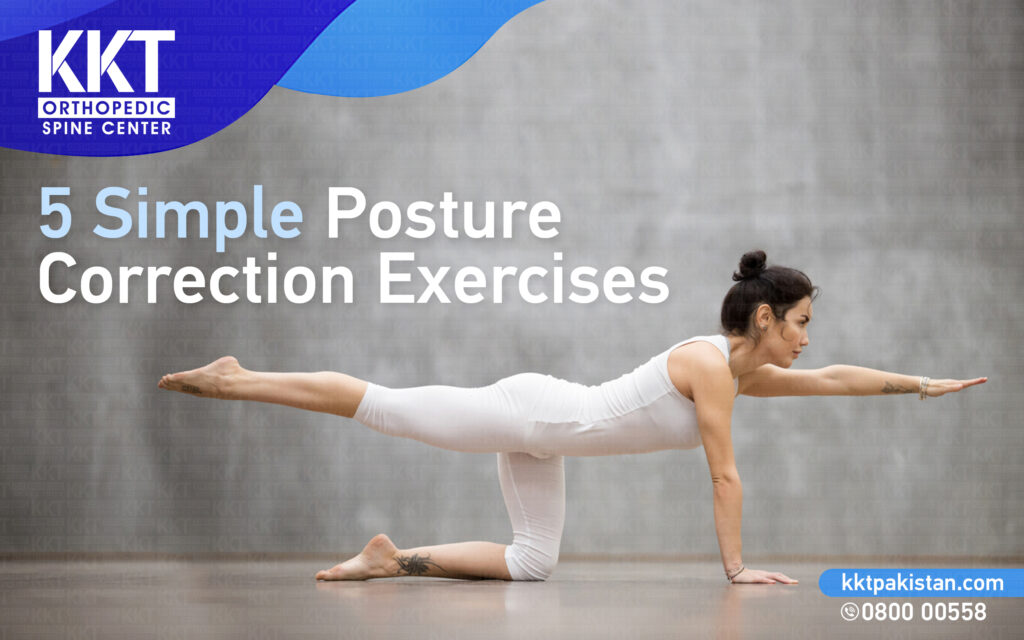
“Sit up straight”, and “Fix your posture” aren’t just annoying things told to us by our teachers and parents. There are several bad posture side effects or causes, for instance., pain in the neck or back, spinal curvature, headaches, etc. Poor posture also involves slouching or looking over the handheld devices for excessive periods of time. A sedentary lifestyle or being physically inactive might also be one of the culprits behind poor posture. Posture correction exercises play a significant role in improving posture. A proper posture is way more than just appearance it plays a vital role in improving strength, flexibility, and balance. Moreover, it also reduces excessive stress on ligaments and muscles. Poor Posture Symptoms: Some of the bad posture symptoms include the following: Rounded shoulders Headache Pain in the neck, shoulder, and back Muscle fatigue Forward head carriage Benefits of proper posture: The benefits of proper or correct posture are as follows: Increased/boosted confidence Better mood Increased self-esteem Decreased risk of injury Reduced back & neck pain Lesser headaches Decreased tension in neck & shoulders Posture Correction Exercises: Posture correction exercises have several benefits including balance, muscle strength, etc. Following are some of the exercises to improve posture: 1. Bridges: To perform a bridge exercise, follow the steps mentioned below: Lie straight on your back on the floor with your knees bent and feet flat. By engaging your core and buttock muscles, lift your hips (therefore raising your lower back and buttocks off the floor). Hold it for some seconds and take three deep breaths. Gently come back to the initial position and repeat the same steps. This exercise helps strengthen abdominal and gluteal muscles hence relieving the stress on the lower back. 2. Child Pose: To perform the child pose, follow the steps mentioned below: Sit on your shinbones on the floor with your knees together; big toe touching, and heels extended apart towards each side. Bend forward towards your hips and extend by walking through your hands on the floor. Sink your hips towards your feet (place a pillow underneath your thighs if they can’t go down). Place your forehead on the floor gently or turn your head to either side. Either rest your arms along the body or keep them extended. Breath into the back of the rib cage and waist Relax remaining in this pose for about 30 seconds and come back to the initial position gently. 3. Kneeling Hip Flexor: To perform kneeling hip flexor, follow the steps mentioned below: Initially put both of your knees on a soft surface. Then bring your one foot forward placing it flat on the floor – note to make sure that the knee is positioned with the ankle. Extend your arms towards the knee (providing support if needed). Straight up and gently lean forward into the stretch. You can feel the stretch in the rear leg (top of your thigh) and groin. Slowly come back to the initial position. Repeat the stretch about 10 times on both legs. 4. Plank: To perform a plank, follow the steps mentioned below: Start by lying on your stomach and putting your forearms against the floor. Lift your body off the floor engaging your core and balancing on your forearms and toes. Make sure to keep your spine in a neutral position (i.e., no sagging lower back or butt lifted high up). Hold this posture for about 20-30 seconds and then gently come back down to the floor. Repeat this exercise about 2 to 5 times. 5. Upper Trapezius Stretch: To perform this stretch, follow the steps mentioned below: Choose either between performing this stretch while standing or sitting. Once done, place your right hand on the opposite side of your head, and place your left hand behind your back. Now start by gently tilting bringing your head towards your right shoulder. Put slight pressure for a deeper stretch but not too much. Hold this stretch for about 15-30 seconds and repeat with the left hand. This stretch mainly stretches the neck and upper back muscles and is also helpful for people with forward neck syndrome. Seeking Medical Attention: In case of back, neck, or shoulder pain get in touch with KKT Orthopedic Spine Center, Pakistan. We provide revolutionary non-surgical treatment for various spinal ailments along with highly qualified orthopedic consultants. For booking an appointment click on the link below:
Text Neck Syndrome: Signs, causes, and Exercises for Relief

Text neck is also referred to as tech neck. It is a repetitive injury to the neck due to stress. This pain in the neck is caused due to excessive strain from using handheld devices (e.g., mobile, tablets, etc.). The forward posture when using these devices can result in backache, headache, and neck, arm, or shoulder pain. Text neck syndrome is one of the most common and ever-increasing issues these days. How can someone get a text neck? The use of mobile phone, tablets, and other handheld devices have become quite common in everyone’s life. And excessive time spent on these devices can result in neck pain. Tech neck or text neck occurs when your neck muscles strain when using the phone for prolonged periods of time. Symptoms of text neck syndrome: Following are some of the symptoms of text or tech neck: Chronic neck and shoulder pain Numbness from neck to arms Weakness in arms and hands Sharp or nagging pain in the shoulders and neck Forward-head posture Rounded shoulders Headache Decreased mobility Symptoms associated with text neck may increase due to excessive use of mobile phones or other handheld devices. Less common symptoms of text neck: Cervical radiculopathy Balance issues Ergonomics changes for text neck: Following are some of the ergonomics adjustments for text neck prevention: Take frequent breaks Practice proper posture Sit straight Raise your mobile phone Be physically active Exercises For Text Neck: Along with exercises, some lifestyle or ergonomics changes are also beneficial for text neck. Here are some of the exercises: 1. Chin tuck: To perform this text neck exercise, follow the below-mentioned steps: Sit on a chair with your shoulder back, head, and torso in an upright position. Place your two fingers on your chin. Tuck in your chin using your fingers (to keep the chin tucked into your chest). Hold it in for a few seconds. Relax and repeat at least 2 to 3 sets of 10 times each. 2. Neck stretches: To perform this neck exercise, follow the steps mentioned below: Sit up straight and keep your feet flat on the floor. Relax your arms on the sides Place your left hand on your head and tilt it towards your left arm. To deepen the stretch, apply just a small amount of pressure on your head. Hold the stretch for about 30 seconds Lift your head swiftly. Repeat the same stretch on the right side. Summary: In case you have neck pain, book your appointment with KKT Orthopedic Spine Centre, Pakistan. We have 8 operational centers across Pakistan providing treatment for various spinal ailments.
Osteoarthritis in the Neck (Cervical Spondylosis)

Cervical osteoarthritis is also known as cervical spondylosis. This disorder involves joints, discs, and bones in the neck or cervical spine. With age, the discs gradually break down, losing the fluid and becoming stiff. Cervical spondylosis or osteoarthritis is a generalized term for age-related wear and tear in the neck. Common symptoms of osteoarthritis in the neck include neck pain and stiffness. Symptoms of Osteoarthritis in the neck: Usually, osteoarthritis (cervical spondylosis) causes no symptoms. But if osteoarthritis in neck symptoms do occur, the following are some of the common ones: Pain in the neck Stiffness in the neck Headaches (Arthritis in the neck can cause headaches if the damage occurs at the top of the spine (first, second or third vertebrae) Narrowing of the spine Weakness and numbness in the arms, hands, and fingers Difficulty in bending or turning the neck Risk factors of Osteoarthritis in the neck: What causes arthritis in the neck? The degenerative changes occurring throughout the spine as we age can lead to cervical spondylosis or osteoarthritis. One of the major risk factors of osteoarthritis is age. This spine-related condition is most common among middle-aged and older adults. However, there are several other factors that may increase the risk of arthritis in the neck, these include: 1. Family history: Having a family history of osteoarthritis, neck pain, and spondylosis. 2. Job type: An occupation that involves repetitive motions, heavy lifting, or overhead work putting stress on the cervical spine. 3. Other medical conditions: Any prior injury to the neck or trauma can also increase the risk of osteoarthritis. 4. Weight Excessive weight can lead to a higher risk for osteoarthritis in the neck. More weight puts excessive pressure on the joints. Furthermore, with excess weight, the inflammation caused can be more damaging. Exercises for neck arthritis: Physical activity or exercise plays a significant role in relieving arthritis pain in the neck. They strengthen the muscles that support the joints and decrease joint stiffness. Moreover, to improve mobility exercises also help with increasing blood flow. A couple of exercises can help relieve symptoms of arthritis in the neck. Some of these exercises include the following: Chin tuck Active cervical rotation Shoulder rolls However, there are some neck arthritis exercises to avoid. They include: Sit-ups Bridges Military press Tips for exercises with osteoarthritis in the neck: Following are some of the tips for safe stretching: Perform the stretches smoothly and gently Note that the stretch shouldn’t be painful Slowly increase the depth of stretches over time and repeat them if needed. Don’t hold your breath In case of pain, book an appointment with KKT orthopedic consultants. KKT offers non-surgical spinal treatment for various conditions including osteoarthritis. For further information, you can contact us at the number given below. Phone: 0800-00-558
Exercises for a pinched nerve in the neck:

A pinched nerve is a spine-related condition in which the nerves get compressed or irritated in the spine. The medical term for a pinched nerve in the neck is cervical radiculopathy. A pinched nerve can occur in any part of the spine; cervical, lumbar, thoracic, etc. This condition occurs due to an injured or inflamed nerve root. A pinched nerve in the neck: Causes Excessive pressure or compression on the nerve root or surroundings can result in a pinched nerve. Following are the common causes of a pinched nerve in the neck (cervical radiculopathy): Risk factors of a pinched nerve in the neck: Cervical radiculopathy or pinched nerve in the neck risk factors include: All of these factors can increase the risk of a pinched nerve in the neck. Symptoms of Pinched nerve in the neck: Exercises for Pinched Nerve in the Neck: Is walking good for a pinched nerve in the neck? Sitting in the same position for prolonged periods of time can result in pain. This is why try to walk around your home or workplace as much as you can. Pinched nerves have several reasons behind them, from wear and tear to arthritis. Due to the pain caused by this condition, various people tend to limit their physical activities. Not being physically active can increase the risk of a pinched nerve. But don’t worry, below are some of the exercises that you can try to relieve the pain caused due to pinched nerves. 1. Side bends: This exercise helps reduce the tension in the neck and back muscles. Following are the steps: 2. Shoulder rolls and shrugs: The tension in the neck can be reduced by moving the shoulders. Moreover, it can also alleviate any headaches associated with pinched nerves. Follow the below-mentioned steps to perform shoulder rolls and shrugs: 3. Child’s pose: For pinched nerves, a child pose can be quite beneficial for some people. 4. Neck tilts/chin tucks: This exercise helps stretch the back as well as neck muscles. For doing this stretch, follow the below-mentioned steps: 5. Head turns: This exercise aids in restoring the range of motion, however, they can feel a bit difficult the first time around. Exercises to avoid with the pinched nerve in the neck: Performing the following exercises can result in aggravating the pain: Let’s wrap up! There are several spine, muscles, and joint-related conditions that can lead to neck pain, numbness, and stiffness. If you are experiencing chronic neck pain, consult with a specialist. Treatment for a pinched nerve or at home remedies include: KKT Orthopedic Spine Center offers a non-surgical treatment involving personalized soundwave frequencies. KKT has 8 operational centers across Pakistan and centers in about 13 countries worldwide. For further information, you can contact us through the below-given number, and one of our representatives will guide you to the best of their ability. Phone: 0800-00-558 Or click on the link below to book your appointment.
Stiff Neck: Causes & Symptoms:

Stiffness in the neck can be due to several reasons including; disease related to the cervical spine or structure of the neck. Our cervical spine contains vertebrae; the building blocks of the spine. Along with muscles, ligaments, and tendons. All of them work together to provide support to the cervical spine and the head. They also allow the neck to move in different directions. A stiff neck causes symptoms like headache, shoulder pain, or/and shoulder stiffness. A stiff neck can also be a symptom of meningitis accompanied by fever and headache. If one of the neck muscles strains, or is injured it can result in a stiff neck. Stiff Neck Causes: Causes of the stiff neck are mostly associated with overused muscles and strains. Neck stiffness can cause pain ranging from mild to severe making it difficult to move the head. Cervicogenic headache with a stiff neck is also common. Severe neck pain and stiffness may have several causes. Common Stiff Neck causes: Some of the most common causes of neck pain and stiffness include the following: 1. Strain: Even a minor strain to the neck can result in neck stiffness. This strain to the neck can occur due to: Sleeping in the incorrect position Sitting for prolonged periods of time; say on a desk The posture while using mobile phones, i.e., looking down. Sports injury or any other injury/fall Slouching while using a laptop or mobile phone 2. Arthritis: Arthritis or cervical spondylosis of the neck can also cause stiffness. This pain in the neck and stiffness may reduce/get better when lying down. Arthritis pain can worsen while performing activities like driving or sitting for using the computer. 3. Whiplash injury: Whiplash is an injury to the cervical spine due to sudden head jerk movement (forward and backward). Pain and neck stiffness are symptoms of whiplash injury. This injury is to the muscles, tendons, bones, or ligaments of the neck (can be all). Other common symptoms of whiplash injury include the following: Dizziness Headache Trouble concentrating Back pain Shoulder pain Memory loss 4. Others: Some other common causes of neck stiffness include the following: Falling Sport injuries Excessive stress Anxiety Slouching Poor sleeping posture Uncommon stiff neck causes: Several uncommon conditions related to the spine can result in neck stiffness. These causes can include: – Cervical Herniated Disc: A cervical herniated disc is a spine-related condition in which the inner part of the disc slips out breaking down the outer layer of the disc. This puts excessive pressure on the nerves, compression as well as inflammation in the tissues nearby. – Degenerative disc disorder: In this spine-related condition, over time the intervertebral discs lose water content and height. This increases the pressure on the joints, nerves, ligaments, and muscles. Therefore, cervical degenerative disc results in neck stiffness and pain. – Cervical spinal stenosis: Cervical spinal stenosis is the narrowing of the cervical spine. This compresses the spinal nerves which can result in other problems like neck pain and stiffness. – Pinched nerves: Pinched nerves in the cervical spine can be due to any condition including spondylosis and slipped disc. These conditions can lead to pain and stiffness in the neck. Moreover, the pain can also extend to the arms. When to seek medical attention? Your poor posture, improper sleeping position, or an injury to the cervical spine can also be the reason behind neck stiffness. There are several home remedies and stiff neck treatment options. In case you don’t know the cause of your neck stiffness, consult your healthcare physician. KKT Orthopedic Spine Center offers a non-surgical treatment involving personalized soundwave frequencies. KKT has 8 operational centers across Pakistan and centers in about 13 countries worldwide. For further information, you can contact us through the below-given number, and one of our representatives will guide you to the best of their ability. Phone: 0800-00-558 Or click on the link below to book your appointment.
Is a bulging disc causing you neck pain?

Our spine is made of several bones and joints known as vertebrae and facet joints respectively. In-between every vertebra there exists a gel-filled disc also known as the intervertebral disc acting as the shock absorber. They also help the spine to move and in case this disc is damaged, it can push back into the spinal canal pressing on the nerves. The disc usually bulges out on one side which is the reason why the symptoms can be felt on one side of the body. Relatively this condition is painless, other bulging disc symptoms may include the following: Neck pain Pain in the shoulder, arms, chest Weakness or numbness in your arms or fingers Pain during movement Reduced range of motion The patient might consider numbness and pain due to a bulging disc as having a heart attack. Symptoms of a bulging disc depend highly on the amount of pressure it is putting on the spinal nerves. Often herniated discs and bulging discs are interchangeable. However, these two have quite some differences with herniated discs being the more advanced stage. Yes, eventually bulging discs become herniated discs. Cervical herniated discs occur when the intervertebral disc’s inner layer stretches out of the outer layer, therefore, into the spinal canal. Causes of Bulging Discs: Over time, disc degeneration caused due to wear and tear leads to bulging discs. This degeneration also causes the spinal discs to weaken. Other common bulging disc causes include: Strain or injury Obesity Smoking Poor posture Inactivity or sedentary lifestyle Age Lifting heavy weight leads to long-term trauma Some of the general causes of a bulging disc in the neck include the following: Neck muscles get strained Injury to the neck muscles but no proper treatment is received for it Prolonged sitting in the same or poor position and physical inactivity Exertion on the cervical vertebrae due to overweight Degeneration and decline in the body’s healing process due to increasing age. Bulging disc Vs. Herniated disc: In a bulging disc, the outer wall of the intervertebral disc remains intact. However, with a herniated disc the inner layer (nucleus) leaks out into the spinal canal through the rupture in the annulus (outer layer). Our cervical spine consists of vertebrae ranging from C1 through C7. Out of these vertebrae, bulging discs in the neck are more common among C5-C6, followed by C6-C7 & then C4-C5. Myelopathy can also occur due to cervical bulging discs leading to various symptoms including: Difficulty walking Loss of motor skills Loss of balance Pain & stiffness in the neck Moreover, unlike a bulging disc, pain is one of the common slipped disc symptoms as it is an advanced stage and is more likely to affect the nerves. Prevention and care for Bulging Disc: There are several ways to prevent & reduce the stress caused due to a bulging disc. Some of these precautions include: Maintain a proper posture Avoid lifting heavy objects, especially with improper posture Stay physically active and practice regular stretches & exercises for bulging disc Quit smoking Avoid sitting, standing, and bending repetitively Apply hot and cold therapy Avoid any high-impact activities Conclusion: Bulging discs as well as cervical herniated or slipped discs can cause neck pain. Practice the above-mentioned preventive measures for bulging discs in the neck. If you are experiencing increased symptoms or pain in the neck, book your appointment with KKT Orthopedic Specialists. KKT Pakistan offers non-surgical treatment for the victims of spinal ailments, and back and neck problems including slipped disc treatment. KKT treatment primarily focuses on the root cause of the pain. For booking an appointment, kindly get in touch with us through our patient care line. Phone: 0800-00-558 Or click on the link below.
How to get relief from neck and shoulder pain?

There are several reasons behind neck pain and shoulder pain. In most cases, it is commonly caused due to an accident or injury. However, sometimes there also can be a serious medical condition behind the pain. The skull is supported by the muscles, bones, and ligaments in the neck and any abnormalities can lead to stiffness and pain in the neck. This pain can also be accompanied with: Numbness Weakness Stiffness Tingling Soreness or spasms Neck pain and Shoulder pain: Sitting on the desk in the office the entire day in the same position can lead to pain in the neck. There are various precautions, gentle exercises, and home remedies to relieve neck and shoulder pain. How to get relief from neck and shoulder pain? Following are some of the ways for neck & shoulder pain relief: Rest Ice and heat therapy Use the right pillow for your neck at night Improve your sitting and standing posture Gentle exercises and stretches for the neck and shoulders How to prevent neck & shoulder pain? One of the major reasons behind neck pain is bad or poor posture. In order to prevent neck pain simple daily life changes can help, for instance: While working for prolonged periods of time or traveling for long distances, take short breaks in-between. Keep your screen (laptop or computer) at eye level Make sure you are practicing a proper posture, i.e., your shoulders, ears, and hips are aligned. Avoid tucking the phone in between your ear and shoulder The weight of a heavy bag on your shoulders can put a strain on your neck, so avoid lifting heavyweight. While sleeping, ensure that your head, neck, and spine are aligned. Causes of neck pain & shoulder pain: As mentioned earlier, there are several reasons behind neck and shoulder pain. Below is the list of the most common causes behind it: Rotator cuff injury: Our shoulder joint consists of a group of muscles and tendons for stabilization, known as the rotator cuff. Injury, trauma, or tear in the rotator cuff can make it difficult for you to move your arm. Other major causes of rotator cuff injury include: Overuse Acute injury Wear and tear of the joint Poor posture Acute tear due to a fall, injury, or while lifting a heavy object. Whiplash injury: Whiplash is caused due to the sudden back-and-forth movement of the head. This results in tearing muscles, ligaments, or tendons of the neck. Whiplash injury can also be caused due to physical abuse, sports-related injuries, and accidents or trauma. Other causes of whiplash injury include: Horseback riding Falls Cycling collisions Blows to the head with a heavy object Cervical Spondylosis: This condition refers to the wear and tear in the cervical spine affecting the joints and discs. Cervical spondylosis is an age-related condition resulting in severe pain and stiffness in the neck. Common causes of cervical spondylosis include: Bone spurs Herniated or slipped disc Injury to the spine Lifting heavy objects or repetitive movements A pinched nerve in the neck: The pinched nerve in the neck is also known as cervical radiculopathy. Herniated or slipped discs in the cervical spine can cause cervical radiculopathy. The pinched nerve in the neck can cause neck and shoulder pain radiating from the cervical spine down to the arm. Other symptoms of cervical radiculopathy include: Pain radiating down: Chest Upper back Herniated or Slipped disc: Due to a fall or injury to the spine, the inner portion (the nucleus) bulges out, this is known as a herniated or prolapsed disc. Disc herniation is also known as a slipped disc. This bulged-out disc can compress the nerve roots causing pain, numbness, and tingling along that nerve’s pathway. Slipped disc in the neck can lead to: Shoulder pain Pain radiating down the arm Numbness and tingling Poor posture and sleeping position: Do you often wake up with neck pain? Poor sleeping posture or the wrong pillow can be to blame. Moreover, sitting in an incorrect posture for prolonged time periods can also lead to neck pain as it can strain your neck muscles. Poor posture can result in stiff neck and shoulder pain as well. To prevent neck pain, practice the above-mentioned precautionary measures and improve your posture. Frozen Shoulder: The cause of frozen shoulder is unknown however, its major symptom includes aching or dull pain in the outer shoulder. When to seek medical attention? If you feel neck or shoulder pain when you wake up in the morning or any of the signs of the above-mentioned conditions consult an orthopedic specialist. KKT Orthopedic Spine Center offers a revolutionary and sophisticated Canadian technology spinal treatment. In case of neck pain, book your appointment with KKT Orthopedic Consultants and get relief from your pain without any surgery. KKT Pakistan has highly qualified orthopedic surgeons in Lahore, Karachi, Peshawar, and other metropolitan cities across Pakistan. For booking an appointment, click on the link below.
What is causing my neck pain and headache?

Headaches and neck pain are often associated and linked to each other. The neck pain is itself extremely challenging and headaches just add to it. Common symptoms include: Neck Stiffness & Soreness Difficulty moving the neck Headaches along with neck aches can cause several issues, for instance: Visual disturbances Dizziness Increase in the pain Issues with concentrating Neck Pain and Headaches: There are various conditions aiding in neck pain and headaches. This neck-related issue can be a symptom of conditions related to the head. Similarly, headaches can be caused due to neck-related issues. There are various types of headaches that may lead to neck pain including cluster headaches, or tension headaches. Poor posture, stiffness, injury to the cervical spine, as well as disc herniation can lead to neck aches and headaches. One of the major causes of cervicogenic headaches includes: Injury to the neck – whiplash injury Nerve compression in the cervical spine. Cervicogenic Headache: This is a stabbing or throbbing pain starting from the neck and the back of the head. Cervicogenic headaches are secondary headaches that can lead to aching or dull pain on one side of the head. These can often be confused with migraines. The major difference between the two is that cervicogenic headaches occur due to a condition associated with the cervical spine. Symptoms of Cervicogenic Headache: Common symptoms of cervicogenic headache include the following: Pain on one side of the head Neck stiffness Pain: Around the eyes And due to certain neck postures or movements Symptoms caused due to cervicogenic headaches can be somewhat similar to migraines as well. They include: Noise sensitivity Light sensitivity Blurry vision Stomach related issues e.g., upset stomach Depending on the severity of cervicogenic headache, symptoms can be different. For instance, it usually affects one side but depending on the severity of the pain, it can also occur on both sides of the neck. Tips for relieving headaches caused due to neck pain: There are several ways of relieving headaches caused due to a condition in the neck. Some of the ways to reduce pain include: First and foremost, maintaining a proper workplace ergonomics Practice a good posture Get enough sleep Watch your sleeping posture Increase your physical activity Manage the mental stress Try heat and cold therapy When to seek medical attention? If you feel stiffness in the neck, cervicogenic headache, or other spinal ailments, consult a specialist. KKT Orthopedic Spine Center offers a revolutionary non-surgical Canadian technology, for spinal ailments, and chronic back, and neck pain treatment. KKT Pakistan has qualified orthopedic surgeons in Lahore, Karachi, Peshawar, as well as other metropolitan cities across Pakistan. Book your appointment with KKT Orthopedic Consultants today.