
Table of Contents
- Best Physiotherapists in Lahore
- Rehabilitation and Recovery
- Physical Therapy and Mobility Support
- Daily Therapy and Recovery Management
- Experience Modern Spine Care with KKT Pakistan
- FAQs
Best Physiotherapists in Lahore
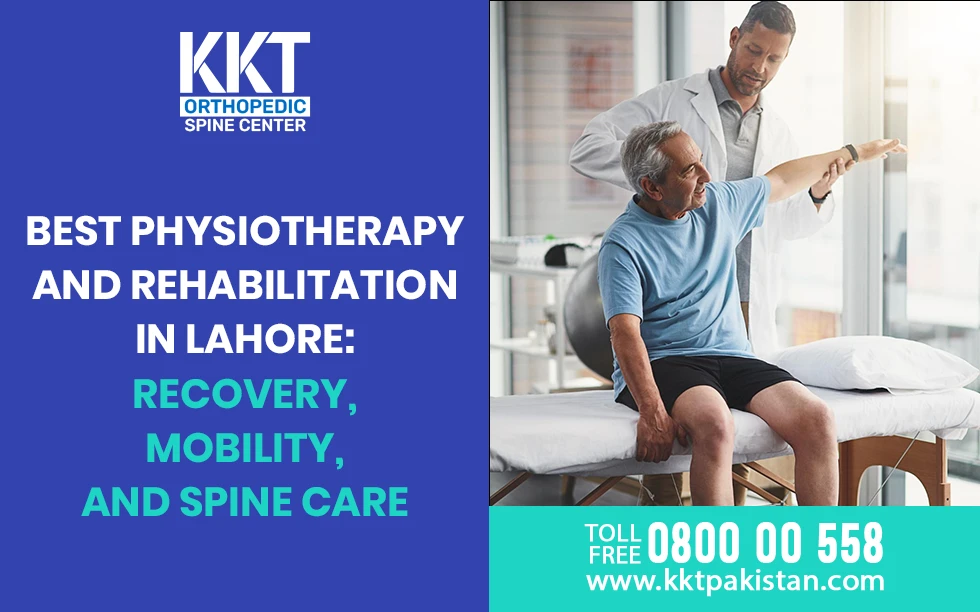
Lahore is home to a growing number of highly qualified physiotherapy professionals, but the quality and depth of care vary significantly from one clinic to another. Choosing the right physiotherapist means looking beyond credentials; it means finding a team that listens, diagnoses thoroughly, and builds a personalized recovery plan designed around your specific condition. The best physiotherapists in Lahore combine clinical expertise with modern rehabilitation techniques, ensuring that every patient receives targeted, results-driven care from the very first session.
Physiotherapy Treatment Methods
Physiotherapy treatment is far more than simple exercises prescribed in a room. It is a structured, evidence-based clinical process that combines hands-on manual therapy, therapeutic modalities, and movement science to restore function and reduce pain. Treatment methods commonly used by skilled physiotherapy specialists in Lahore include manual joint mobilization, soft tissue therapy, dry needling, ultrasound therapy, TENS (Transcutaneous Electrical Nerve Stimulation), and heat or cold therapy. Each of these methods targets specific tissue types and pain pathways. For instance, ultrasound therapy promotes deep tissue healing at a cellular level, while manual mobilization restores joint mechanics that are restricted due to injury or chronic postural stress. The physiotherapist selects and combines these approaches based on a detailed clinical assessment, ensuring the treatment is both safe and maximally effective for your condition.
Types of Physiotherapy Care
Physiotherapy is not a single discipline; it branches into several specialized areas, each addressing a distinct category of health conditions. Musculoskeletal physiotherapy, the most widely sought type in Lahore, addresses joint pain, muscle injuries, arthritis, and post-surgical recovery. Neurological physiotherapy supports patients recovering from stroke, spinal cord injuries, and conditions like Parkinson’s disease by rebuilding motor control and coordination. Sports physiotherapy focuses on athletic injuries and performance restoration, while pediatric physiotherapy helps children with developmental movement disorders. Cardiorespiratory physiotherapy, though less commonly discussed, plays a vital role in helping patients recover lung function and cardiovascular endurance after serious illness. Understanding which type of care your condition demands is the first step toward a truly effective recovery journey.
Physiotherapy Sessions and Recovery
One of the most common questions patients ask is how long it takes to see results from physiotherapy. The answer depends on the nature of the condition, its severity, and how consistently the patient follows through with both clinical sessions and home-based exercises. Typically, an initial session lasts between 45 and 60 minutes and includes a thorough physical assessment, followed by the first round of hands-on treatment. Patients with acute injuries often begin experiencing meaningful relief within three to five sessions, while those managing chronic conditions such as disc herniation or spinal stenosis may follow a longer structured plan spanning several weeks. Consistency is the single greatest predictor of success in physiotherapy. Patients who attend sessions regularly and engage with their prescribed home exercises recover faster and more completely than those who treat sessions as optional.
Rehabilitation and Recovery
Rehabilitation is the bridge between injury or illness and the return to full, pain-free daily function. It is a comprehensive process that goes beyond symptom management, addressing the root causes of dysfunction and systematically rebuilding strength, mobility, and confidence in movement. In Lahore, rehabilitation programs at leading clinics are designed with a clear, phased structure that moves patients progressively from pain reduction to full functional independence, with each phase building on the gains of the one before it.
Stages of Rehabilitation and Recovery
Rehabilitation is not a single event; it unfolds in carefully planned stages, each with its own goals and clinical focus. The process generally moves through three broad phases: the acute or protective phase, the sub-acute or restorative phase, and the functional or return-to-activity phase. In the acute phase, the primary goal is to reduce inflammation, control pain, and protect damaged tissues from further harm. The restorative phase introduces progressive therapeutic exercises that rebuild the range of motion and begin restoring muscular strength. The final functional phase focuses on dynamic movement patterns, endurance training, and the specific activities the patient needs to return to, whether that is office work, sport, or physically demanding labor. Each stage is clinically monitored and adjusted based on the patient’s real-time progress, ensuring nothing is rushed and nothing is missed.
Early Phase of Physical Rehabilitation
The early phase of rehabilitation is arguably the most critical, as the decisions made in these first days and weeks have a profound impact on long-term outcomes. During this phase, the physiotherapist works to protect healing tissues while preventing the muscle weakness and joint stiffness that typically develop when the body is immobilized after injury or surgery. Gentle, carefully graded movement is introduced early to stimulate circulation, prevent scar tissue adhesion, and maintain neurological connection to the affected area. Pain management during this phase often involves a combination of therapeutic modalities such as cryotherapy, electrotherapy, and gentle soft tissue work. Patients are also educated on posture, positioning, and activity modification, essential knowledge that reduces the risk of re-injury and empowers them to take an active role in their own healing.
Final Phase of Functional Recovery
The final phase of rehabilitation is where patients transition from clinical recovery to real-world readiness, and it is one of the most rewarding stages of the entire process. At this point, pain is largely resolved, and the focus shifts to rebuilding functional strength, neuromuscular coordination, and movement confidence. Exercises become more dynamic and specific to the patient’s lifestyle or occupation. For a professional who spends long hours at a desk, this phase includes postural endurance training and ergonomic movement retraining. For a sportsperson, it involves sport-specific drills that mirror competitive demands. This phase also addresses psychological readiness, because fear of re-injury can cause patients to unconsciously guard their movements in ways that create new compensatory pain patterns. A skilled physiotherapy team helps patients move freely and confidently through this stage, closing the gap between recovery and full return to life.
Key Factors Supporting Rehabilitation Recovery
Successful rehabilitation is influenced by several interconnected factors that extend beyond the walls of the clinic. Patient motivation, adherence to home exercise programs, nutritional support for tissue healing, adequate sleep, and stress management all play meaningful roles in the speed and completeness of recovery. From a clinical standpoint, early intervention consistently produces better outcomes. Patients who begin physiotherapy treatment promptly after injury or symptom onset tend to recover faster and with fewer complications than those who delay. The quality of the therapeutic relationship between patient and physiotherapist also matters enormously; trust, clear communication, and realistic goal-setting create the foundation for a recovery process that is both effective and sustainable.
Physical Therapy and Mobility Support
Mobility is the currency of daily life, and when it is compromised by pain, injury, or a spine condition, every aspect of living is affected. Physical therapy in Lahore addresses mobility loss at its source, using targeted exercise and manual techniques to restore range of motion, rebuild muscular support, and re-educate movement patterns that protect the body from future harm. The goal is not merely to get patients moving again, but to ensure they move well, with proper mechanics, adequate strength, and lasting functional independence.
Exercises Commonly Used in Physiotherapy
Therapeutic exercise is the foundation of every effective physiotherapy program, and the exercises selected for each patient are chosen with precision based on their diagnosis, strength baseline, and functional goals. Resistance training using body weight, resistance bands, or light free weights builds the muscular support that protects vulnerable joints and spinal structures. Stretching and flexibility work restore tissue length and joint mobility that has been lost through injury, chronic tension, or prolonged immobilization. Core stabilization exercises, a category that receives particular emphasis in Lahore’s best physiotherapy clinics, strengthen the deep abdominal and spinal muscles that form the body’s natural internal support system. Balance and proprioception training rebuilds the body’s ability to sense its own position in space, dramatically reducing the risk of falls and re-injury. Breathing exercises and relaxation techniques round out many programs, addressing the neuromuscular tension that chronic pain creates throughout the body.
Physiotherapy Exercises for Back Pain
Back pain is one of the most prevalent musculoskeletal complaints in Lahore, and physiotherapy exercises represent one of the most effective, evidence-backed approaches to managing it without surgery or long-term medication. The specific exercises prescribed depend entirely on the type and source of back pain, which is why a proper clinical assessment must always precede the exercise prescription. For lumbar disc-related pain, extension-based movements such as the McKenzie press-up sequence are commonly used to centralize and reduce disc-related referred pain. For patients with muscle-dominant back pain caused by poor posture or occupational strain, targeted core stabilization exercises like bird-dog, dead bug, and modified planks are highly effective at rebuilding the spinal support system. Pelvic tilt exercises, cat-camel stretches, and hip flexor lengthening work are also used widely to address the muscular imbalances that frequently underlie chronic low back pain. All of these exercises, when performed correctly and progressed appropriately, can produce dramatic improvements in pain, posture, and daily function.
Physiotherapy Approaches for Back Pain Management
Managing back pain through physiotherapy involves a combination of hands-on treatment and active rehabilitation, and the most successful outcomes are consistently achieved when both components work together. Manual therapy techniques such as spinal mobilization and manipulation are used to restore joint movement and reduce pain by addressing the mechanical dysfunction at the root of the problem. Soft tissue therapy releases myofascial tension in the muscles surrounding the spine, improving blood flow and reducing the muscular guarding that amplifies pain. Heat therapy relaxes tight musculature and improves tissue extensibility, making it an ideal preparation for exercise sessions. Postural correction is a critical but often overlooked component of back pain management. The physiotherapist identifies and addresses the habitual movement patterns and static postures that are driving the problem. When all of these approaches are combined in a cohesive, individualized treatment plan, physiotherapy for back pain produces outcomes that rival those of surgical intervention for the most common spinal conditions.
Daily Therapy and Recovery Management
Recovery from a musculoskeletal or spinal condition is not something that happens only during clinic sessions; it is a continuous process that unfolds across every hour of every day. The physiotherapist’s role is to equip patients with the knowledge, exercises, and self-management strategies they need to support their healing between appointments. Daily therapy habits, including prescribed home exercises, movement breaks, posture awareness, and activity pacing, are what separate patients who recover fully and permanently from those who experience ongoing cycles of pain and relapse.
Recovery Duration in Physiotherapy for Back Pain
The question of how long physiotherapy for back pain takes to produce results is one that depends on several important variables. Acute back pain arising from a muscle strain or a minor disc irritation often responds remarkably well within four to six sessions spanning two to three weeks. Subacute pain that has persisted for several weeks before treatment begins may require a program of six to twelve sessions, with progressive home exercise integration throughout. Chronic back pain, defined as pain lasting longer than three months, typically benefits from a more extended physiotherapy program of twelve or more sessions, focused not only on pain reduction but on retraining movement patterns and building the long-term resilience of spinal supporting structures. Patients with structural diagnoses such as herniated discs, spinal stenosis, or spondylolisthesis may follow even longer programs, particularly if they are pursuing physiotherapy as an alternative to surgery. In all cases, the trajectory of recovery is significantly accelerated when patients engage fully with their home exercise programs and maintain open communication with their physiotherapist about their progress and any setbacks.
Progress Evaluation During Physical Therapy
Tracking progress throughout a physiotherapy program is essential, not only to measure the effectiveness of treatment, but to ensure the program evolves in response to the patient’s changing needs. Effective physiotherapy is never static. At regular intervals, the physiotherapist reassesses pain levels using standardized scales, measures joint range of motion, evaluates functional strength, and reviews the patient’s ability to perform the daily activities that matter most to them. These objective benchmarks allow the therapist to identify what is working, adjust what is not, and progress the treatment plan at a pace that is both challenging and safe. Patients are also encouraged to track their own progress through pain diaries, functional activity logs, and simple self-assessment tools, practices that build self-awareness and reinforce the empowering reality that recovery is happening, even on the days when progress feels slow.
Experience Modern Spine Care with KKT Pakistan
For patients dealing with spinal pain, disc conditions, and mobility limitations in Lahore, KKT Pakistan represents a genuinely different level of care, one grounded in internationally validated technology, specialized clinical approach, and a deep commitment to non-surgical healing. KKT’s approach to spine treatment goes beyond conventional physiotherapy by incorporating a proprietary sound wave technology that addresses spinal conditions at their structural root, delivering lasting relief that many patients had stopped believing was possible.
Best Physiotherapy Consultants
KKT Pakistan’s team of spine and rehabilitation consultants brings together decades of combined clinical experience across orthopedics, neurology, and musculoskeletal physiotherapy. Each consultant undergoes specialized training in KKT’s internationally recognized treatment protocol, ensuring that every patient receives a world-class standard of diagnostic and therapeutic care regardless of the complexity of their condition. The consultants at KKT Pakistan are known not only for their clinical skill but for their patient-first approach, taking the time to fully understand each patient’s history, lifestyle, and goals before designing a treatment program. This depth of individualized attention is what consistently sets KKT’s consultants apart from generalist physiotherapy practices across Lahore.
Why KKT Pakistan?
KKT Pakistan is not simply another physiotherapy clinic; it is a specialized spine care center that has transformed the lives of thousands of patients across Pakistan who were living with chronic back pain, neck pain, disc herniation, sciatica, and scoliosis.
The KKT treatment uses precisely calibrated acoustic sound waves to correct vertebral misalignments and restore proper spinal mechanics, addressing the structural cause of pain rather than masking its symptoms. This technology, used in KKT centers across multiple countries, has enabled patients to avoid surgery, reduce or eliminate dependence on pain medication, and return to active, fulfilling lives they had almost given up on. KKT Pakistan combines this technology with comprehensive physiotherapy rehabilitation, nutritional guidance, and ongoing patient education, creating a holistic treatment experience that supports complete and lasting recovery from the inside out.
For appointments and consultations, visit KKT Pakistan’s clinic in Lahore and take the first step toward a pain-free, fully mobile life.
Our Success Stories
The true measure of any spine care and physiotherapy clinic is not the technology it uses or the qualifications it holds; it is the real lives it has changed. At KKT Pakistan, thousands of patients have walked through the doors unable to sit comfortably, sleep through the night, or perform the basic tasks of daily life, and have walked out months later with restored mobility, eliminated pain, and renewed hope. From young professionals whose careers were threatened by chronic back pain, to elderly patients who had accepted immobility as an inevitable part of aging, KKT’s rehabilitation programs have produced outcomes that continue to inspire both patients and clinicians. These success stories are not exceptions; they are the expected result of combining spinal technology with compassionate, expertly delivered physiotherapy care.
FAQs
1. Can physio help weak legs?
Yes, physiotherapy is highly effective for addressing leg weakness, regardless of whether it stems from a neurological condition, a spinal problem such as nerve compression, or simple muscular deconditioning.
2. Can physiotherapy be done daily?
In many cases, yes – though the appropriateness of daily physiotherapy depends on the condition being treated and the type of treatment involved.
3. How many days of physiotherapy for back pain?
The number of physiotherapy sessions for back pain depends on the severity and duration of the condition. Acute pain may improve within 6–8 sessions, while chronic conditions can require 12–20 sessions or longer.
4. What should I wear to physiotherapy?
Comfortable, loose-fitting clothing that allows easy access to the area being treated is always the best choice for physiotherapy sessions.
5. How successful is physiotherapy?
Physiotherapy has one of the strongest evidence bases of any healthcare discipline, with extensive clinical research demonstrating its effectiveness across a wide range of musculoskeletal, neurological, and spinal conditions.