
Table of Contents
- Introduction
- Intervertebral Disc Structure
- What Is a Bulging Disc?
- What Is a Herniated Disc?
- Structural and Clinical Differences Between Bulging and Herniated Disc
- Diagnosis and MRI Differences in Disc Conditions
- Bulging Disc Progress into Herniation?
- Recovery and Long-Term Spinal Health
- Non-Surgical Spine Care at KKT Pakistan
- Conclusion
- Frequently Asked Questions (FAQs)
Introduction
Before understanding the difference between a bulging disc vs herniated disc, it is important to understand how spinal discs function within the vertebral column. The spinal cord is composed of vertebrae separated by intervertebral discs that act as shock absorbers. These discs help distribute pressure across the spine, support flexibility, and protect nearby nerves during movement.
Intervertebral discs are continuously exposed to mechanical stress during walking, lifting, bending, and sitting. Over time, repetitive spinal loading, posture imbalance, and age-related degeneration gradually weaken disc structure. As disc integrity decreases, conditions such as disc bulging and disc herniation may begin affecting spinal stability and nerve function.
Although both conditions involve displacement of disc material, their structural changes, MRI appearance, and clinical impact are different. A bulging disc generally involves outward disc expansion with an intact outer layer, while a herniated disc occurs when the inner disc material pushes through a weakened or torn annulus fibrosus.
Understanding these structural differences is important because both conditions may contribute to nerve compression, spinal irritation, mobility restriction, and persistent neck or lower back discomfort. Early recognition and proper spinal care help reduce excessive disc stress and support long-term spinal function.
Intervertebral Disc Structure
The intervertebral discs are specialized fibrocartilaginous structures located between adjacent vertebrae. These discs maintain spinal flexibility while absorbing compressive force generated during movement and weight-bearing activities.
Structure and Function of Spinal Discs
Each spinal disc functions as a cushioning structure that distributes pressure evenly across the vertebral column. These discs allow controlled spinal movement while minimizing friction between vertebrae.
The spine contains 23 intervertebral discs distributed throughout the cervical, thoracic, and lumbar regions. Their ability to absorb mechanical stress is essential for maintaining posture stability and movement efficiency during daily activities.
Disc health depends on hydration, flexibility, and balanced pressure distribution. When disc structure weakens over time, the spine becomes more susceptible to degenerative conditions and nerve-related irritation.
Role of the Nucleus Pulposus and Annulus Fibrosus
The intervertebral disc contains two primary components: the nucleus pulposus and the annulus fibrosus. The nucleus pulposus forms the soft inner portion of the disc and helps absorb compressive force during movement.
Surrounding this inner structure is the annulus fibrosus, a durable outer layer composed of concentric fibrous rings. This outer structure stabilizes the disc and prevents excessive outward displacement of the nucleus pulposus.
These structures work together to maintain spinal flexibility while protecting the vertebral column from excessive mechanical stress. Damage or degeneration affecting either layer may contribute to disc bulging or herniation.
How Disc Degeneration Begins
Disc degeneration commonly develops gradually due to aging, repetitive spinal stress, poor posture, and reduced disc hydration. As hydration decreases, discs lose elasticity and become less capable of absorbing pressure effectively.
Over time, weakened disc tissue becomes more vulnerable to structural deformation. Small tears within the annulus fibrosus may develop, increasing the likelihood of disc displacement and nerve compression.
Degenerative changes are particularly common within the cervical and lumbar spine because these regions experience greater movement and mechanical load throughout daily activity.
What Is a Bulging Disc?
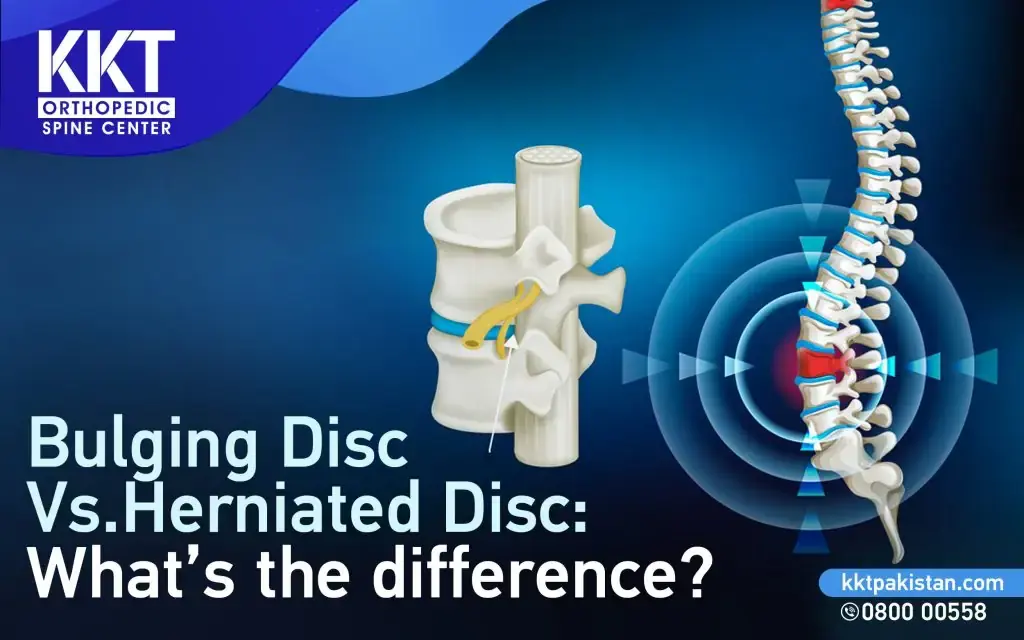
A bulging disc occurs when the intervertebral disc extends outward beyond its normal boundary without complete rupture of the outer annulus fibrosus. This condition develops gradually as disc pressure increases and the outer disc wall weakens.
Disc Bulging and Outward Disc Expansion
In a disc bulge, the nucleus pulposus shifts outward while remaining contained within the annulus fibrosus. The outer layer remains intact, although the disc expands beyond its normal perimeter.
This outward protrusion may narrow nearby spinal spaces and place pressure on surrounding nerves or soft tissues. Disc bulging commonly develops as part of progressive spinal degeneration and repeated mechanical stress.
Bulging discs do not always produce symptoms immediately. In some individuals, discomfort develops gradually as spinal pressure and inflammation increase over time.
Bulging Discs Affect Nearby Structures
As the disc expands outward, nearby nerve roots and surrounding tissues may become irritated. Pressure on spinal nerves can contribute to localized pain, muscular tightness, tingling sensations, or movement restriction.
Inflammatory changes around the affected disc may also increase spinal sensitivity and muscular tension. When disc pressure affects nerve pathways, symptoms may radiate toward the shoulders, arms, hips, or legs depending on spinal level involvement.
Persistent spinal loading may worsen disc expansion and increase stress on adjacent joints and supporting ligaments.
Cervical and Lumbar Disc Bulging
Disc bulging can occur within any spinal region, although cervical and lumbar discs are most commonly affected. Cervical disc bulging may contribute to neck stiffness, shoulder discomfort, headaches, or arm-related symptoms.
Lumbar disc bulging commonly affects the lower back and may produce discomfort extending toward the hips or legs. The lumbar region experiences substantial mechanical stress during lifting, sitting, and repetitive bending activities, increasing susceptibility to degeneration.
What Is a Herniated Disc?
A herniated disc occurs when the nucleus pulposus pushes through a weakened or torn annulus fibrosus into the spinal canal. This condition is also referred to as a slipped disc or ruptured disc.
Disc Herniation and Rupture of Disc Material
Unlike a bulging disc, disc herniation involves disruption of the annulus fibrosus. The inner disc material escapes through weakened disc fibers and may directly compress nearby nerves.
Disc herniation often develops during advanced stages of degeneration or after sudden spinal strain. Activities involving heavy lifting, twisting, or repetitive spinal loading may increase pressure within weakened discs and contribute to rupture.
The extent of disc herniation varies depending on the degree of annular damage and displacement of disc material.
Nerve Compression in Herniated Disc Conditions
Herniated discs commonly produce symptoms when displaced disc material irritates nearby nerve roots. Nerve compression may contribute to radiating pain, numbness, muscular weakness, or altered sensation.
Cervical disc herniation may affect the neck, shoulders, and upper extremities, while lumbar herniation commonly produces lower back pain extending into the hips or legs. Herniated discs frequently affect only one side of the body depending on nerve involvement.
Persistent nerve compression may also reduce mobility, muscular coordination, and movement tolerance during daily activities.
Severity of Disc Herniation Compared to Disc Bulging
In many cases, herniated discs produce more severe symptoms than disc bulges because the displaced disc material directly affects spinal nerves. The inflammatory response associated with disc herniation may also increase nerve sensitivity and pain intensity.
However, symptom severity depends on the location of the disc condition, degree of nerve involvement, and surrounding spinal inflammation. Some bulging discs may also produce substantial discomfort when significant nerve pressure is present.
Structural and Clinical Differences Between Bulging and Herniated Disc
Although both conditions involve displacement of intervertebral disc material, important differences exist in structural integrity, MRI appearance, nerve compression, and symptom presentation.
A bulging disc involves generalized outward extension of the disc while the annulus fibrosus remains intact. In contrast, a herniated disc occurs when the inner nucleus pulposus breaks through weakened annular fibers.
Disc herniation usually represents a more advanced stage of disc degeneration because structural rupture has already occurred. Herniated discs also tend to create more focal pressure on nearby neural structures.
These differences are important during diagnostic evaluation because treatment planning depends on structural severity and degree of nerve involvement.
Bulging Disc vs Herniated Disc Pain
Bulging disc vs herniated disc pain differs in both intensity and distribution. Bulging discs commonly produce localized stiffness and mechanical discomfort around the affected spinal region.
Herniated discs are more likely to cause radiating nerve pain extending toward the arms or legs due to direct nerve root irritation. Pain associated with disc herniation may worsen during coughing, bending, or prolonged sitting.
The severity of symptoms depends on spinal level involvement and the amount of nerve compression present.
Bulging Disc vs Herniated Disc Symptoms
Bulging disc vs herniated disc symptoms may overlap, although herniated discs more frequently produce neurological findings. Common symptoms include muscular tightness, spinal stiffness, numbness, weakness, and radiating pain.
Cervical involvement may contribute to neck and shoulder discomfort, while lumbar involvement commonly affects the lower back and lower extremities. Persistent nerve compression may also reduce movement tolerance and muscular coordination.
Bulging Disc vs Herniated Disc Causes
Bulging disc vs herniated disc causes commonly involve degeneration, posture imbalance, repetitive spinal stress, and reduced disc hydration. Aging gradually weakens disc structure and decreases flexibility within the annulus fibrosus.
Heavy lifting, repetitive bending, spinal trauma, obesity, smoking, and prolonged sitting further increase disc pressure and mechanical strain. Genetic predisposition may also influence susceptibility to disc degeneration.
Bulging Disc vs Herniated Disc Treatment
Bulging disc vs herniated disc treatment depends on structural severity, nerve involvement, and functional limitation. Conservative spinal care often focuses on reducing inflammation, improving movement mechanics, and minimizing spinal stress. Posture correction, controlled movement rehabilitation, spinal stabilization, and activity modification help support disc recovery and reduce mechanical irritation.
When nerve compression becomes severe, additional medical evaluation may be necessary to determine appropriate management strategies.
Non-Surgical Approaches for Disc-Related Conditions
Many disc-related conditions improve through non-surgical spinal care focused on reducing spinal pressure and supporting alignment. Early intervention helps minimize repetitive stress placed on affected discs and surrounding nerves.
Movement correction, posture balance, controlled mobility, and spinal support play important roles in long-term spinal stability and recovery.
Diagnosis and MRI Differences in Disc Conditions
Proper diagnosis helps determine the extent of disc degeneration, nerve involvement, and spinal compression. MRI imaging is one of the most effective tools for evaluating disc-related abnormalities.
MRI Tell the Difference Between a Bulging Disc and a Herniated Disc?
Yes, MRI imaging can clearly differentiate a bulging disc from a herniated disc. MRI scans provide detailed visualization of disc contour, annulus integrity, nerve compression, and displacement of disc material.
Bulging discs generally appear as broad disc extension beyond the vertebral margin, while herniated discs show focal protrusion or extrusion of nucleus pulposus material through the annulus fibrosus. MRI evaluation also helps identify inflammation, spinal canal narrowing, and nerve root involvement associated with disc pathology.
Lumbar Bulging Disc vs Herniated Disc MRI Findings
Lumbar bulging disc vs herniated disc MRI findings vary according to structural severity. Bulging discs often demonstrate symmetrical outward disc expansion without annular rupture.
Herniated lumbar discs commonly reveal localized extrusion of disc material compressing nearby neural structures. MRI may also identify surrounding inflammation and narrowing of the spinal canal.
Lumbar MRI evaluation is particularly important because lower back disc conditions frequently affect walking tolerance, posture, and lower extremity nerve function.
What Test Confirms a Herniated Disc?
MRI remains imaging method for confirming disc herniation because it visualizes both soft tissue and neural structures clearly.
Physical examination, neurological assessment, reflex testing, and movement evaluation also help determine whether symptoms correspond with nerve root compression. In some cases, additional imaging studies may be used to assess spinal stability and structural degeneration.
Physical Examination and Neurological Assessment
Clinical examination helps evaluate posture imbalance, muscular weakness, sensory changes, and restricted movement patterns associated with disc conditions.
Neurological assessment may include reflex testing, muscle strength evaluation, and examination of radiating symptoms affecting the arms or legs. These findings help correlate MRI abnormalities with functional spinal impairment.
Bulging Disc Progress into Herniation
Disc bulging may gradually progress into disc herniation when continued spinal stress weakens the annulus fibrosus further. As degeneration advances, the outer disc fibers lose structural strength and become less capable of containing internal disc pressure.
Progression of Disc Degeneration
As degeneration advances, disc hydration decreases and annular fibers lose structural integrity. Continuous pressure on weakened discs increases the likelihood of outward disc displacement and eventual rupture.
Degenerative progression commonly occurs gradually over time, particularly in individuals exposed to repetitive spinal loading and poor posture habits.
Increased Pressure on the Annulus Fibrosus
Mechanical strain generated during lifting, bending, twisting, and prolonged sitting increases stress within the annulus fibrosus. Repeated spinal compression may contribute to tearing of weakened disc fibers.
Once structural tearing develops, nucleus pulposus material may extend outward into the spinal canal, producing herniation.
Factors That Increase Risk of Disc Herniation
Several factors increase the risk of disc herniation, including obesity, smoking, repetitive lifting, trauma, posture imbalance, and reduced muscular support around the spine.
Smoking decreases oxygen supply to spinal discs and affects tissue healing capacity, while excessive body weight increases compressive load on lumbar structures.
Importance of Early Spinal Care
Early spinal care helps reduce excessive disc stress and supports healthier movement mechanics before degeneration progresses further.
Maintaining spinal mobility, posture balance, and controlled activity levels may help reduce the likelihood of worsening disc displacement and nerve compression.
Recovery and Long-Term Spinal Health
Recovery from disc-related conditions depends on structural severity, nerve involvement, daily habits, and spinal support. Long-term spinal care focuses on minimizing repetitive stress and supporting movement balance.
Healing Timeline for Disc Conditions
Recovery timelines vary depending on the severity of degeneration and nerve compression. Mild disc bulging may improve gradually with posture correction and reduced spinal stress, while herniated disc recovery may require longer rehabilitation periods.
Consistent spinal care and controlled movement support healing and help reduce chronic inflammation surrounding affected neural structures.
Daily Habits That Support Recovery
Healthy posture habits, controlled movement, regular walking, and spinal support help reduce mechanical stress on intervertebral discs. Maintaining balanced activity levels also improves circulation and muscular stability.
Avoiding prolonged sitting and repetitive spinal strain supports better spinal mechanics during recovery.
Activities That Increase Spinal Stress
Heavy lifting, repetitive bending, prolonged sitting, sudden twisting, and poor posture increase compressive load on spinal discs. These activities may aggravate nerve irritation and worsen structural degeneration.
Reducing excessive spinal loading is important for minimizing further disc stress and supporting recovery progression.
Long-Term Posture and Mobility Support
Long-term spinal stability depends on maintaining flexibility, posture awareness, and muscular support throughout daily activities. Balanced movement patterns help reduce recurrent spinal compression and improve functional mobility.
Supporting cervical and lumbar alignment also contributes to reduced muscular fatigue and improved spinal efficiency over time.
Non-Surgical Spine Care at KKT Pakistan
Persistent spinal discomfort associated with disc bulging or disc herniation may indicate underlying spinal imbalance and nerve-related stress. At KKT Pakistan, the focus is on identifying mechanical stress affecting cervical and lumbar spinal structures through a non-invasive approach.
Supporting spinal alignment and reducing excessive disc pressure may help improve movement mechanics, minimize muscular tension, and reduce nerve-related irritation associated with intervertebral disc disorders.
This approach is particularly relevant for individuals experiencing posture-related spinal stress, restricted mobility, or recurrent neck and lower back discomfort linked with disc degeneration. Structured spinal evaluation helps determine whether spinal imbalance is contributing to ongoing symptoms and functional limitation.
Book an appointment to assess spinal stress and support long-term spinal health.
Conclusion
Understanding the difference between a bulging disc vs herniated disc is important for recognizing how structural spinal changes affect nerve function, mobility, and long-term spinal health. Although both conditions involve displacement of intervertebral disc material, disc herniation typically produces greater structural disruption and nerve-related irritation.
MRI evaluation, clinical examination, and symptom assessment help determine the extent of degeneration and guide appropriate spinal care strategies. Early recognition of disc-related changes may help reduce progressive spinal stress and minimize long-term functional limitation.
Supporting spinal alignment, maintaining posture balance, and reducing repetitive mechanical strain play important roles in long-term recovery and spinal stability. Consistent spinal care and controlled movement habits help reduce excessive disc pressure and support healthier spinal mechanics over time.
Frequently Asked Questions (FAQs)
What is worse, a herniated or bulging disc?
A herniated disc is generally considered more severe because the inner disc material pushes through the annulus fibrosus and may directly compress spinal nerves.
Can an MRI tell the difference between a bulging disc and a herniated disc?
Yes, MRI imaging clearly identifies disc contour changes, annular damage, nerve compression, and displacement of disc material associated with both conditions.
What test confirms a herniated disc?
MRI is the most reliable imaging method for confirming disc herniation because it provides detailed visualization of spinal discs and nearby neural structures.
Can a bulging disc become a herniated disc?
Yes, continued degeneration and increased pressure on weakened annular fibers may allow the nucleus pulposus to extend outward, resulting in disc herniation.
Is a herniated disc more painful than a bulging disc?
In many cases, herniated discs produce more intense symptoms because displaced disc material directly irritates spinal nerves.
Can disc conditions improve without surgery?
Many disc-related conditions improve through non-surgical spinal care focused on posture correction, movement support, and reducing excessive spinal stress.